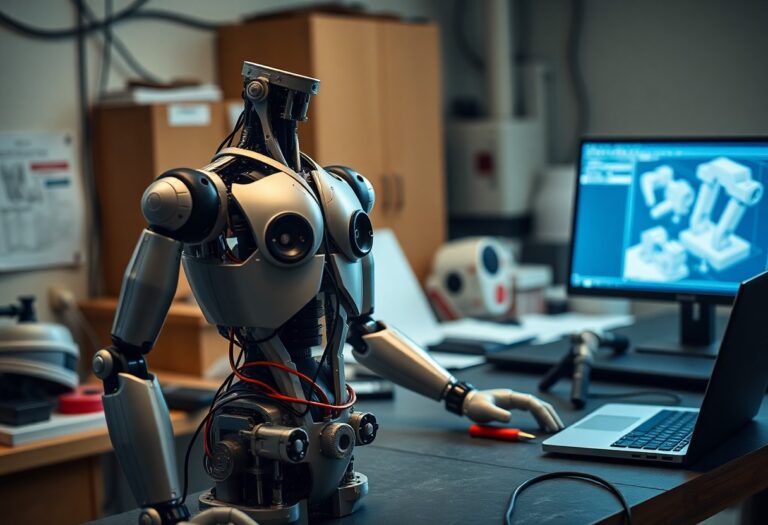
Nvidia’s Official Research Humanoid Has a Chinese Body. Here’s What It Can Do
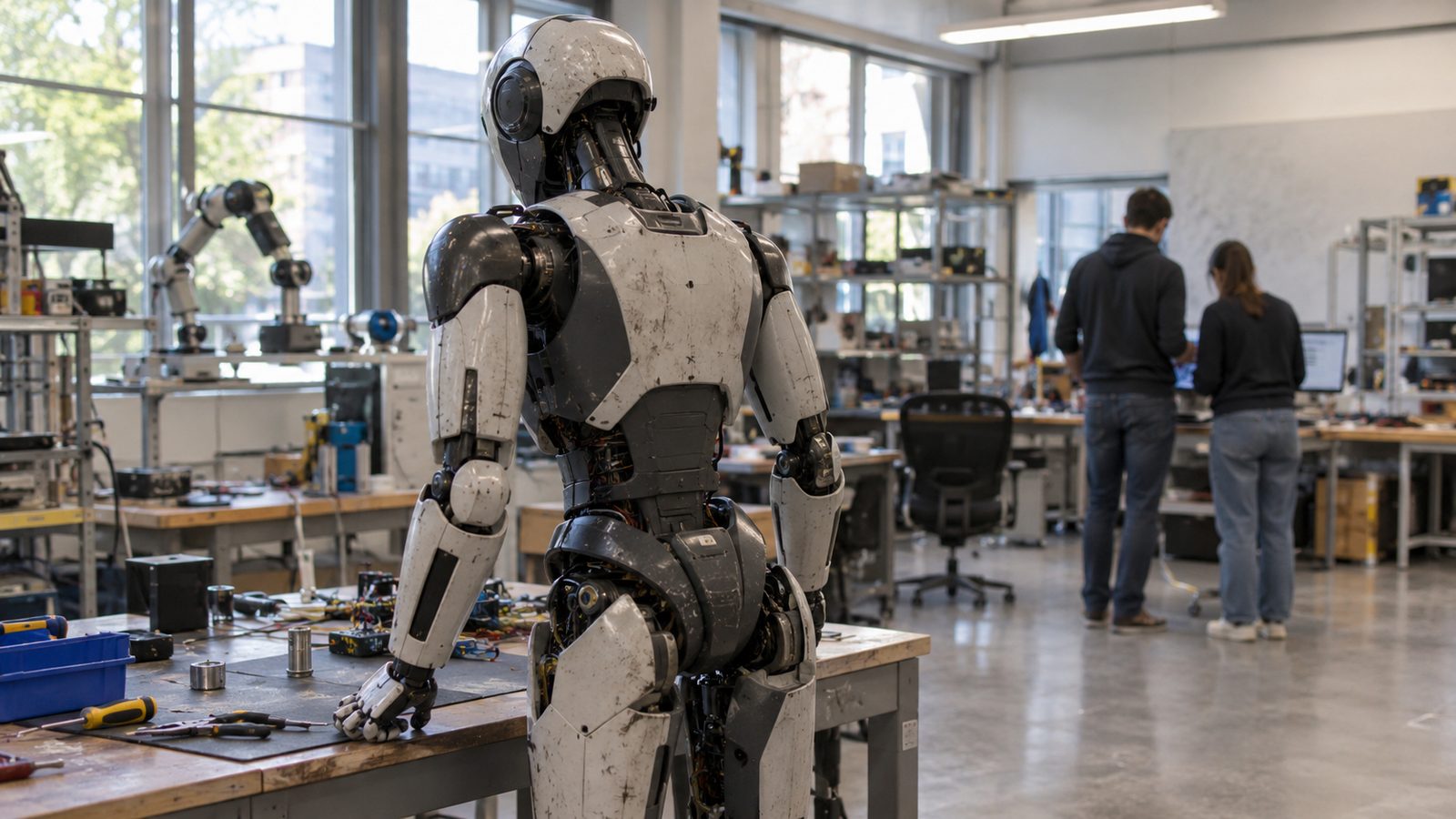
America’s most valuable chip company wanted one standard humanoid robot for university labs. It picked a body made in China. The result is the Nvidia Isaac GR00T Reference Humanoid, and a first-look video of it is now making the rounds on YouTube.
The robot stands nearly 6 feet tall and weighs about 150 pounds, according to Nvidia. It is not for sale in stores, and it will not fold your laundry. It is a shared test machine for the people who are teaching robots to do those things.
The video shows a robot built from three companies’ parts
The clip, posted by the channel DPCcars, presents the robot as Nvidia introduced it. Nvidia first showed it on May 31, 2026, at its GTC Taipei event in Taiwan. The company calls it the first open humanoid “reference design” built on its robot computer and software.
A reference design is a finished blueprint that others can copy and build on. Think of it as a model kitchen in a showroom: every lab gets the same oven, the same counters and the same recipes. That makes it easier to compare results.
The parts come from three places:
- The body is the H2 Plus from Unitree, a Chinese robot maker.
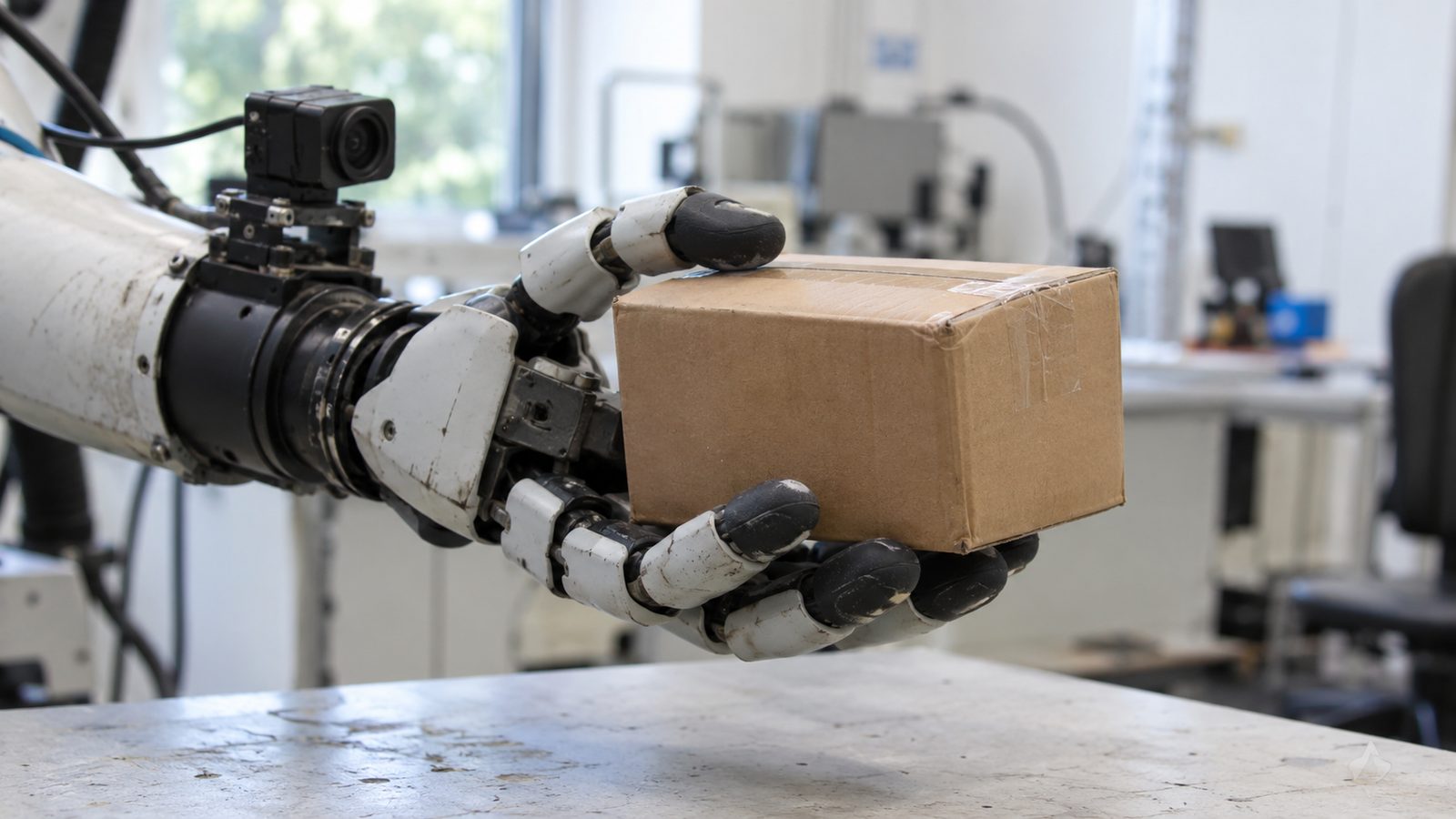
- The hands are two five-fingered hands from Sharpa that can feel what they touch.
- The brain is Nvidia’s Jetson Thor computer, which sits inside the robot, plus Nvidia’s free robot software.
Together, the body and hands can bend and turn in 75 separate ways. The body accounts for 31 of them. Each hand adds 22.
It can see, feel and lift about 15 pounds per arm
A pair of cameras in the head gives the robot depth vision, like two eyes. More cameras sit on the wrists, so it can watch its own hands up close. A motion sensor keeps track of which way is up.
Unitree rates each arm for about 15 pounds of steady load, with a peak of about 33 pounds. The battery holds just under one kilowatt-hour and lasts about three hours, according to the company. The emergency stop sits on a handheld remote.
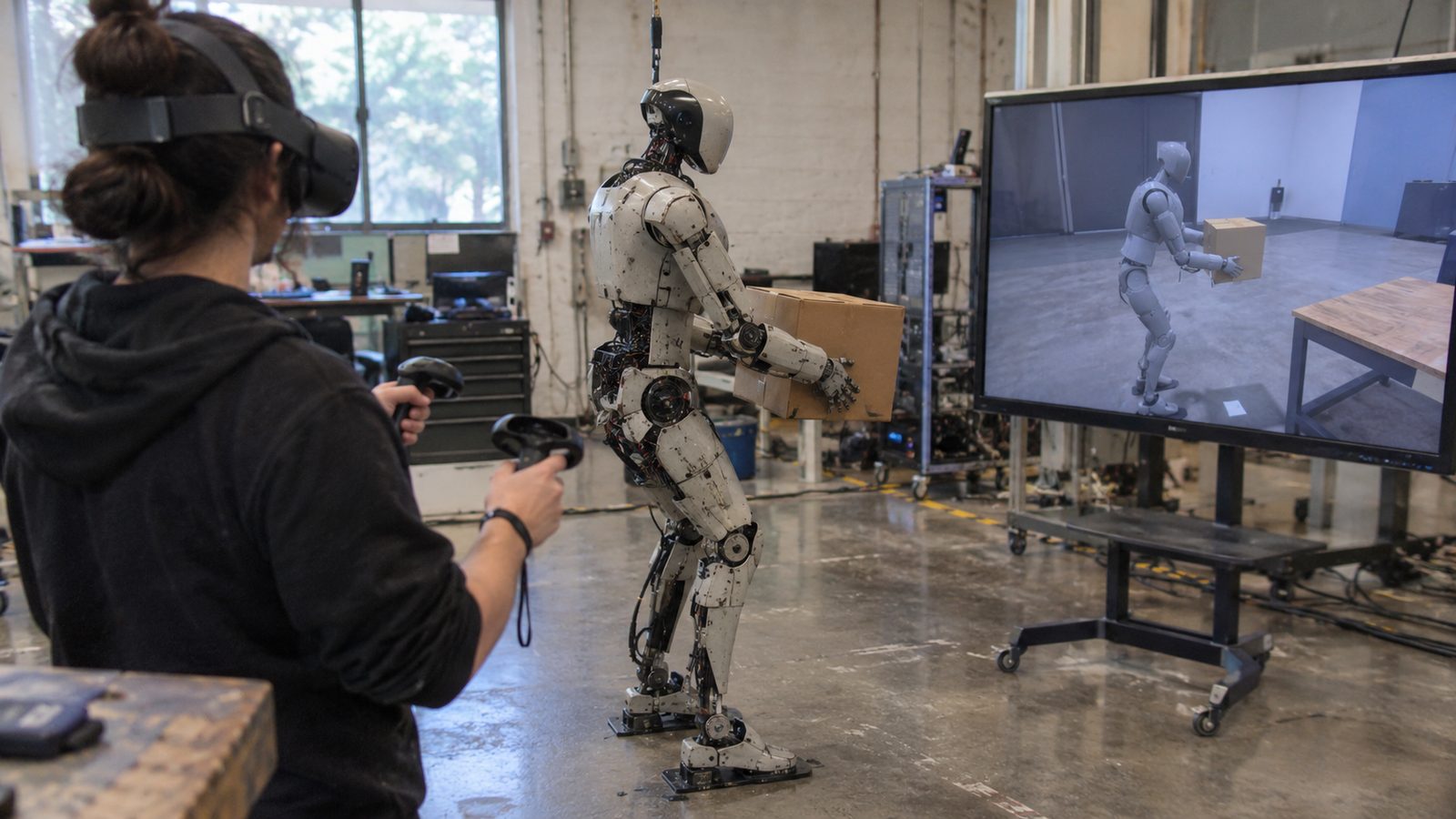
The software is the bigger story. Nvidia’s package lets a person steer the robot remotely to show it a task. The robot records that. Then it practices in a computer simulation before trying the task for real. Nvidia says researchers keep control of all the data their robot collects.
Stanford, ETH Zurich and UC San Diego are already lined up
Nvidia named four early users: the Allen Institute for AI (Ai2), ETH Zurich in Switzerland, the Stanford Robotics Center and a robotics lab at UC San Diego. ETH Zurich professor Marco Hutter said it gives his teams a modern platform for collecting data and testing ideas.
“Developers want humanoid robots that are ready to build on,” said Xingxing Wang, Unitree’s founder and CEO. Nvidia CEO Jensen Huang said humanoids “will bring physical AI to the world’s largest industries.”
Unitree says the H2 Plus will be available in late 2026. Neither company has published an official price. Some third-party shops list it near $100,000, but that is not confirmed by Nvidia or Unitree.
What it means for you: the robot race now runs through Chinese hardware
You will not buy this robot. But the robots that do reach homes and workplaces in a few years may learn their skills on it. That is why the choice of body matters.
Nvidia says it also plans to work with humanoid makers in the US, Europe and South Korea, but it has not named them. For now, the standard research humanoid from an American company walks on Chinese legs. Unitree shipped roughly 5,500 robots last year and aims for up to 20,000 in 2026, according to eWeek.
The fair reading: on this robot, the brain is American and the body is Chinese. If you want to know who is winning the humanoid race, watch which of the two gets cheaper faster.
Sources
- NVIDIA Isaac GR00T Reference Humanoid Robot First Look (DPCcars, YouTube)
- NVIDIA Announces NVIDIA Isaac GR00T Reference Humanoid Robot for Academic Research
- Unitree Announces H2 Plus, an NVIDIA Isaac GR00T Reference Humanoid Robot for Academic Research
- Nvidia, Unitree, and Sharpa Launch New Humanoid Robot for Physical AI Research (eWeek)