Inside a Robot’s Elbow: Why Joints Cost So Much and What That Whirring Means
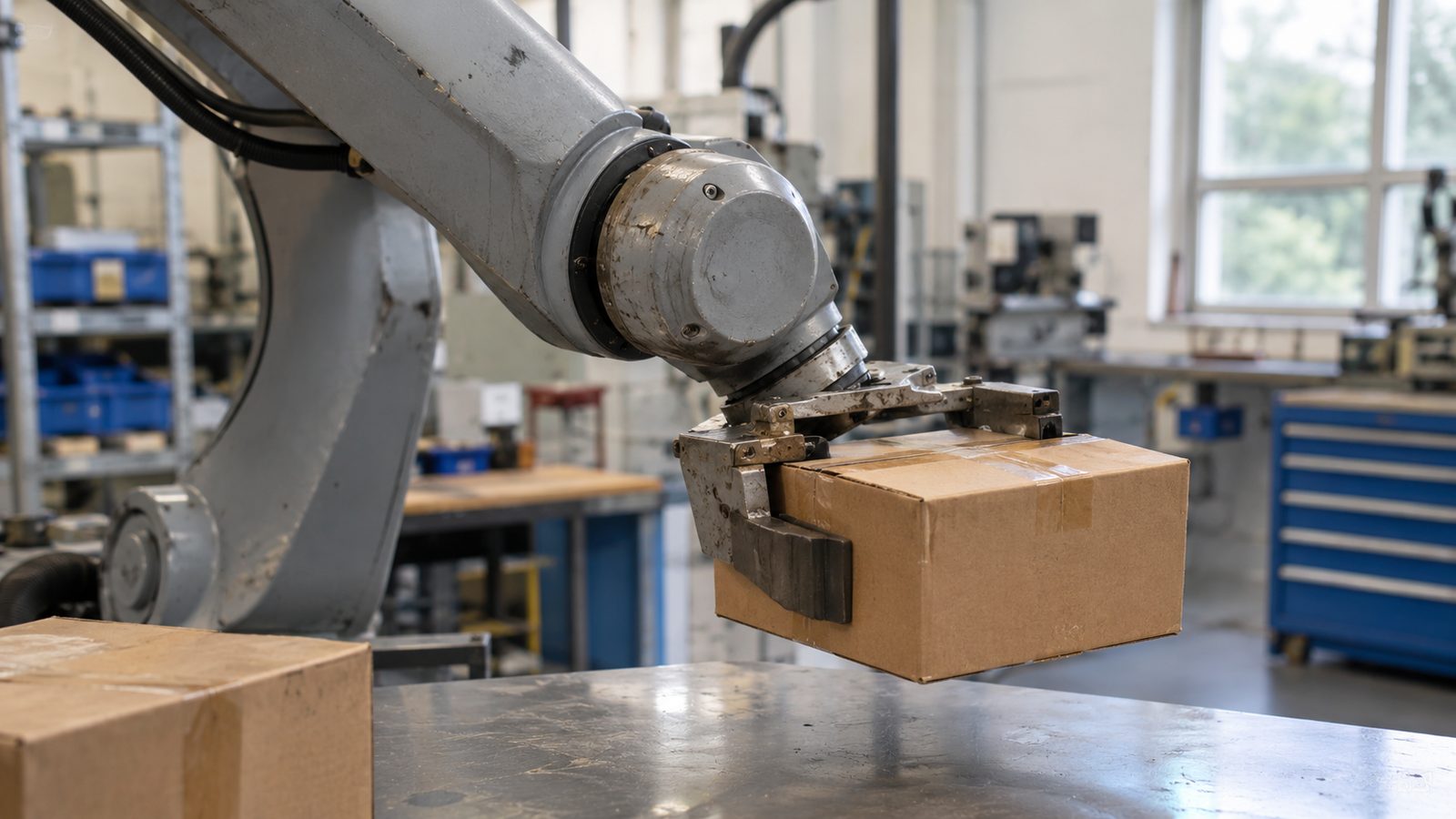
Watch a robot arm lift a box and you hear it before you notice it: a thin, rising whir. That sound comes from the most expensive part of the robot. It is not the computer and not the battery. It is the joint.
One analysis of humanoid robot costs puts it bluntly: the joint, not the AI and not the battery, is the cost problem. Here is what sits inside one, and why.
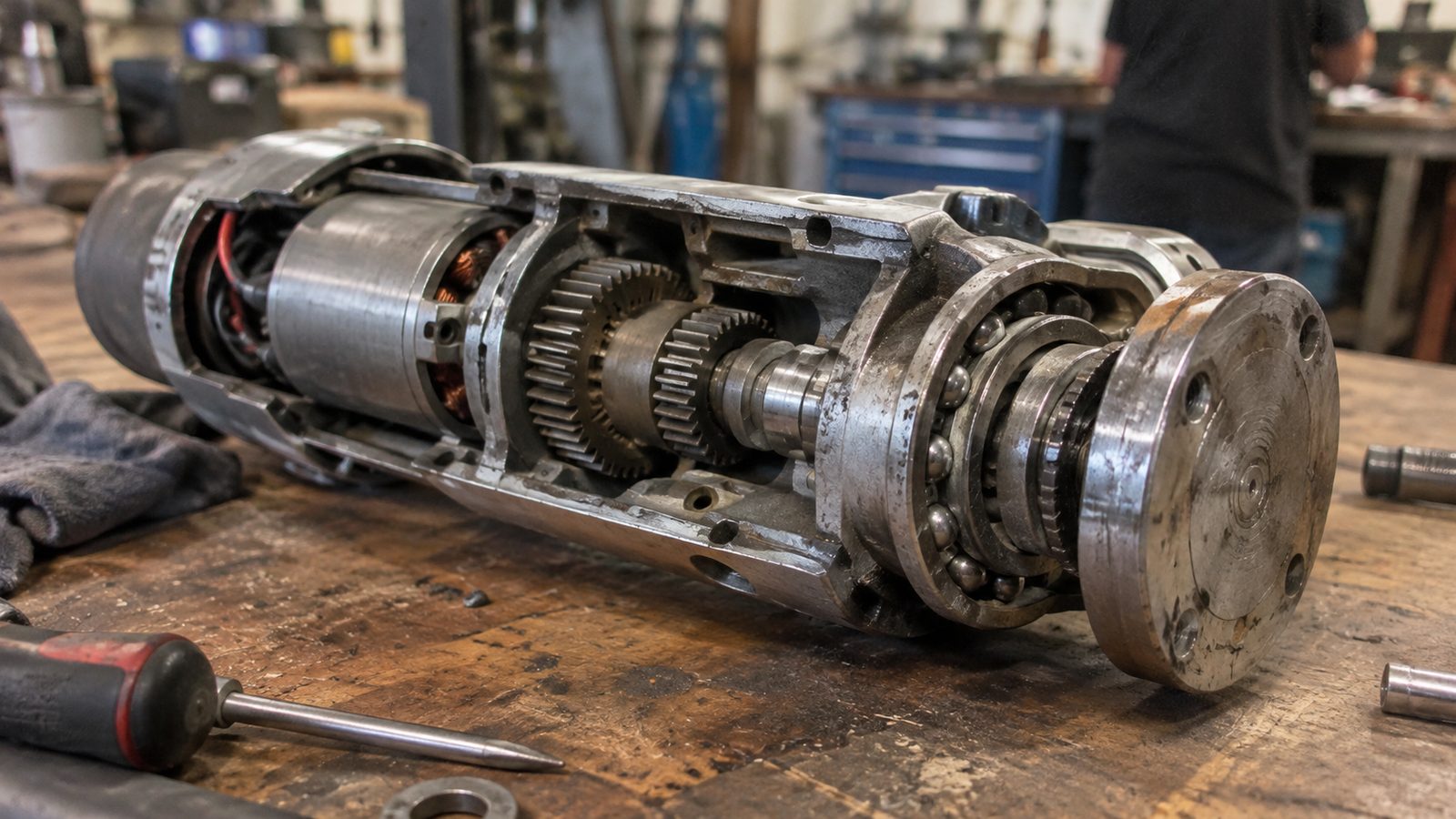
A robot joint is a fast motor and a gear that slows it down
Electric motors are good at spinning fast. They are bad at pushing hard. Think of a kitchen blender: it spins very quickly, but you could stop the blade with a finger if it were safe to try.
A robot elbow needs the opposite. It must turn slowly and push hard enough to lift a load. So every joint pairs a motor with a gearbox. The gearbox works like the low gear on a bicycle. Your legs turn many times, the wheel turns a little, and you climb the hill with less effort.
Engineers describe a gearbox by its ratio. A 100-to-1 gearbox makes the joint turn 100 times slower than the motor, and roughly 100 times stronger, minus some losses. Legged robots often use low ratios, around 6 to 1 or 9 to 1, so their legs can soak up the shock of each step. Arms that must hold a precise position use much higher ones.
A joint also needs a sensor that counts how far it has turned (an encoder), a small circuit board to drive the motor, and bearings. In better robots, a sensor measures how hard the joint is pushing.
The clever gear in the middle is a squeezed steel cup
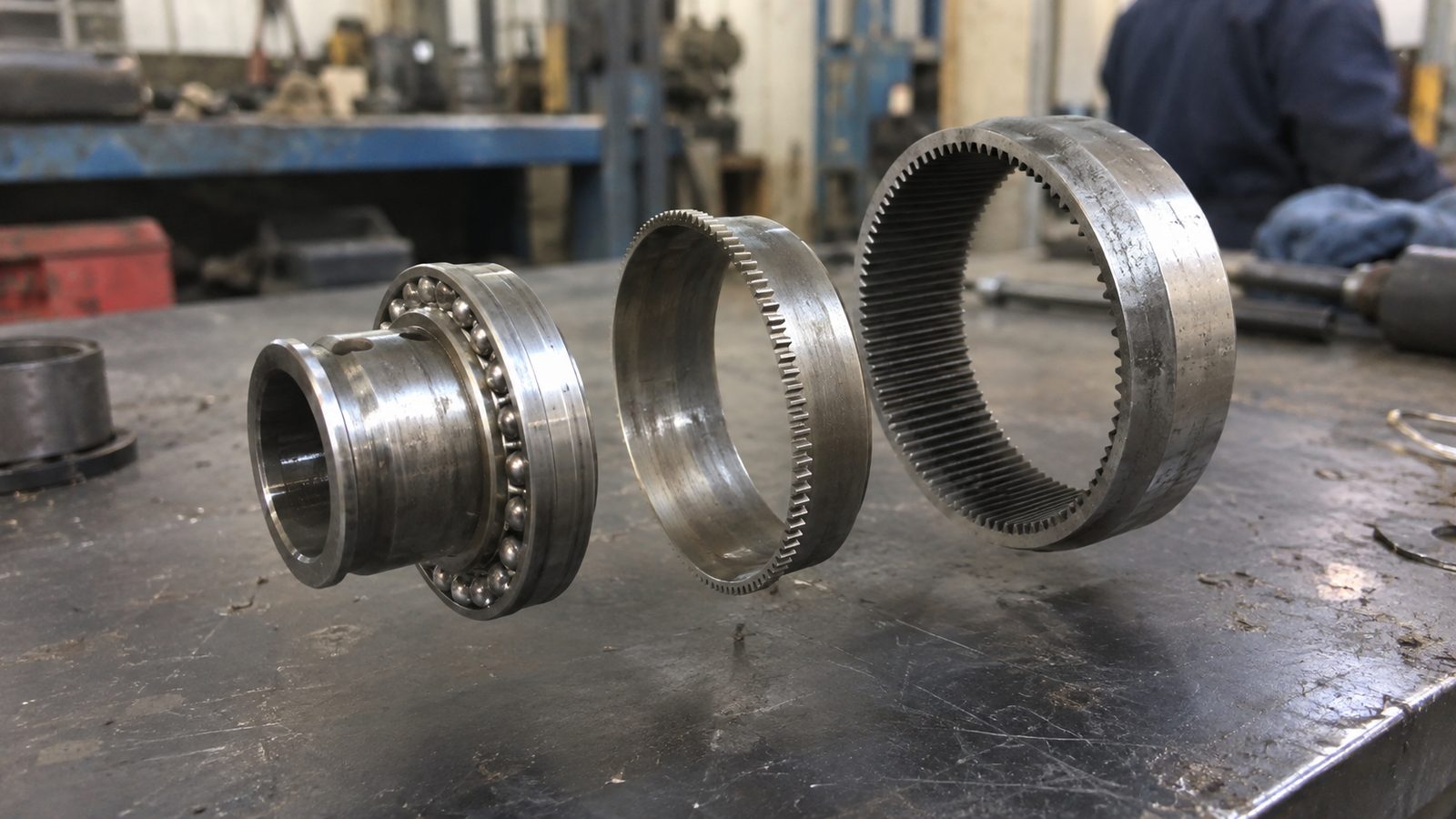
Many precise robot arms use a strain wave gear, often sold as a harmonic drive. An American inventor, C. Walton Musser, developed it in 1955. It has only three main parts.
- An oval spinner. The motor turns an egg-shaped hub wrapped in a thin ball bearing.
- A flexible steel cup. It has teeth on the outside. The oval hub squeezes it into an oval shape as it spins.
- A rigid ring. It has teeth on the inside, two more than the cup has.
Because the cup is squeezed into an oval, its teeth touch the ring only at two opposite spots. As the hub spins, those spots travel around the ring. Each full turn of the motor moves the cup back by just two teeth. Picture rolling a slightly smaller ring inside a bigger one: it creeps around slowly while your hand goes round and round.
The result is a huge slowdown in one small, light package. Because the teeth are always pressed together, there is almost no wobble or slack in the joint. That is why these gears turn up in surgical robots, in factory arms and on NASA’s Curiosity and Perseverance rovers.
Precision is why a single joint can cost thousands
These gears must be machined to tiny tolerances, and few factories can make them well. One 2026 supply-chain estimate puts a high-end strain wave gear at $800 to $1,500. Chinese versions are estimated to cost 30 to 50 percent less.
Now multiply. A full-size humanoid robot has 25 to 35 powered joints. One breakdown by the parts maker HONPINE found the gear alone makes up about 36 percent of a rotating joint’s cost, and a pushing-force sensor another 30 percent. Morgan Stanley has estimated that the moving joints make up about 56 percent of the parts bill for a humanoid like Tesla’s Optimus.
The whir itself mostly comes from gear teeth meeting. In one engineering example, a small gear’s teeth mesh about 1,000 times a second. The faster a gear spins, the higher the pitch. The motor’s electronics can add a faint whine of their own.
A worn joint changes its sound before it fails
Industrial maintenance guides list the same warning signs again and again. You can spot most of them without tools.
- A new sound. Grinding or a low rumble points to tired bearings or pitted gear teeth. A click when the arm changes direction means slack has crept in.
- Grease where it should not be. A greasy streak on the joint usually means a seal has worn out.
- Missed marks. The arm stops a little off its usual spot, or shakes before it settles.
- Error messages. The motor works harder against hidden friction, so overload or current alarms start to appear.
Factory robots typically get fresh grease every 6,000 to 12,000 operating hours, depending on how hard they work. One trade article warns that a single hard knock can speed up wear. Not every noise is the gear, though. Loose bolts or a wrongly set payload can sound the same. Still, if a robot at home or work starts sounding different, take it seriously. The joint is telling you something.
Sources
- Harmonic Drive LLC: Strain wave gearing technology
- Harmonic Drive LLC: Technology overview
- heise online: Harmonic Drive – how a wobbling gearbox ensures precise robot movements
- Machine Design: Five design tradeoffs when evaluating robot gearboxes
- humanoid.guide: Gear ratio in humanoid joints
- humanoid.guide: What does a humanoid robot joint cost?
- humanoid.guide: Quiet joints – where humanoid robot noise comes from
- RoboticsTomorrow (HONPINE): Linear vs rotary actuators for humanoid robot joints
- inRobots: Robot gearboxes and reducers index