Google’s AI Watched One Cornhole Video. Then a Humanoid Robot Sank Seven Straight
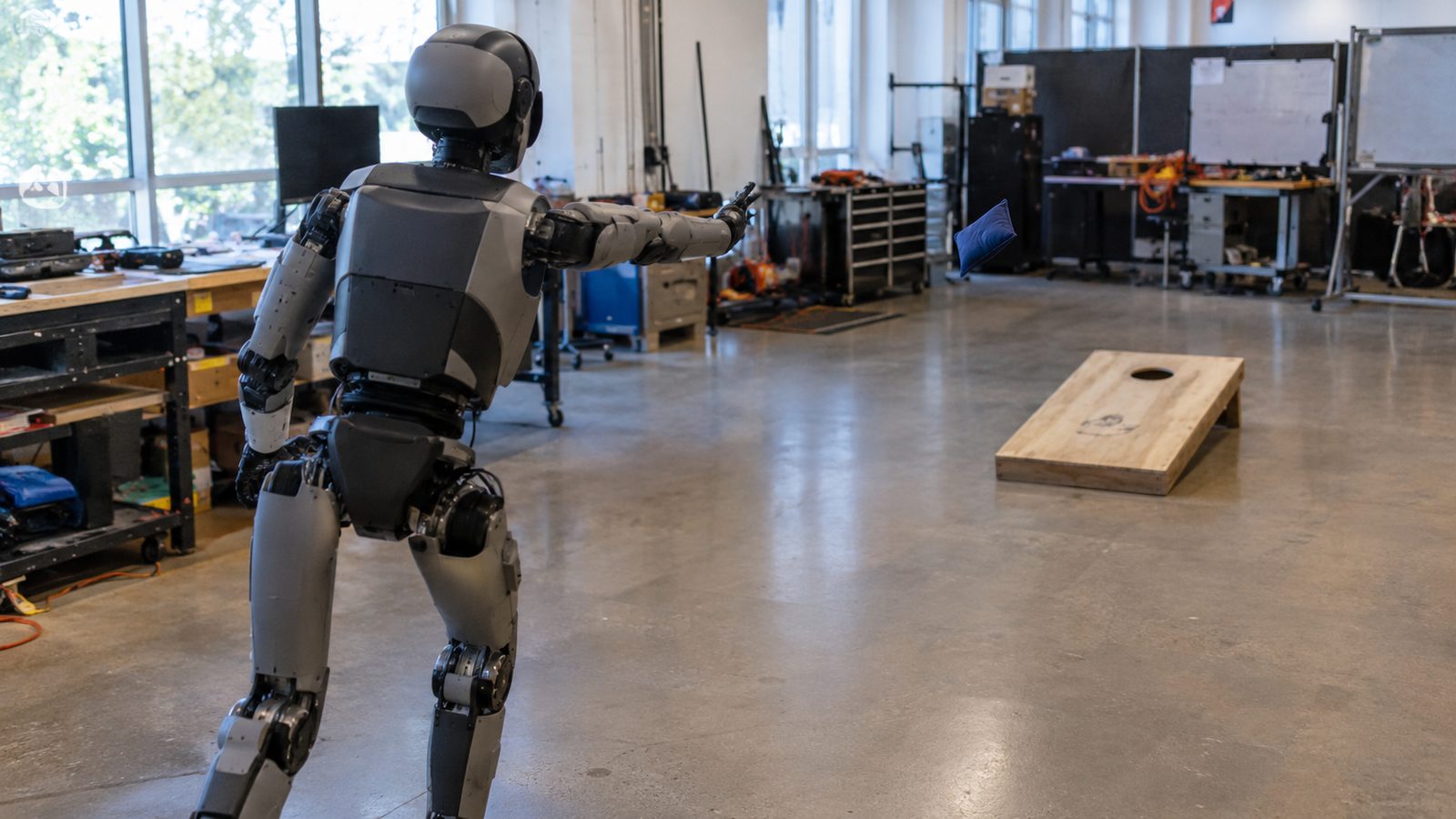
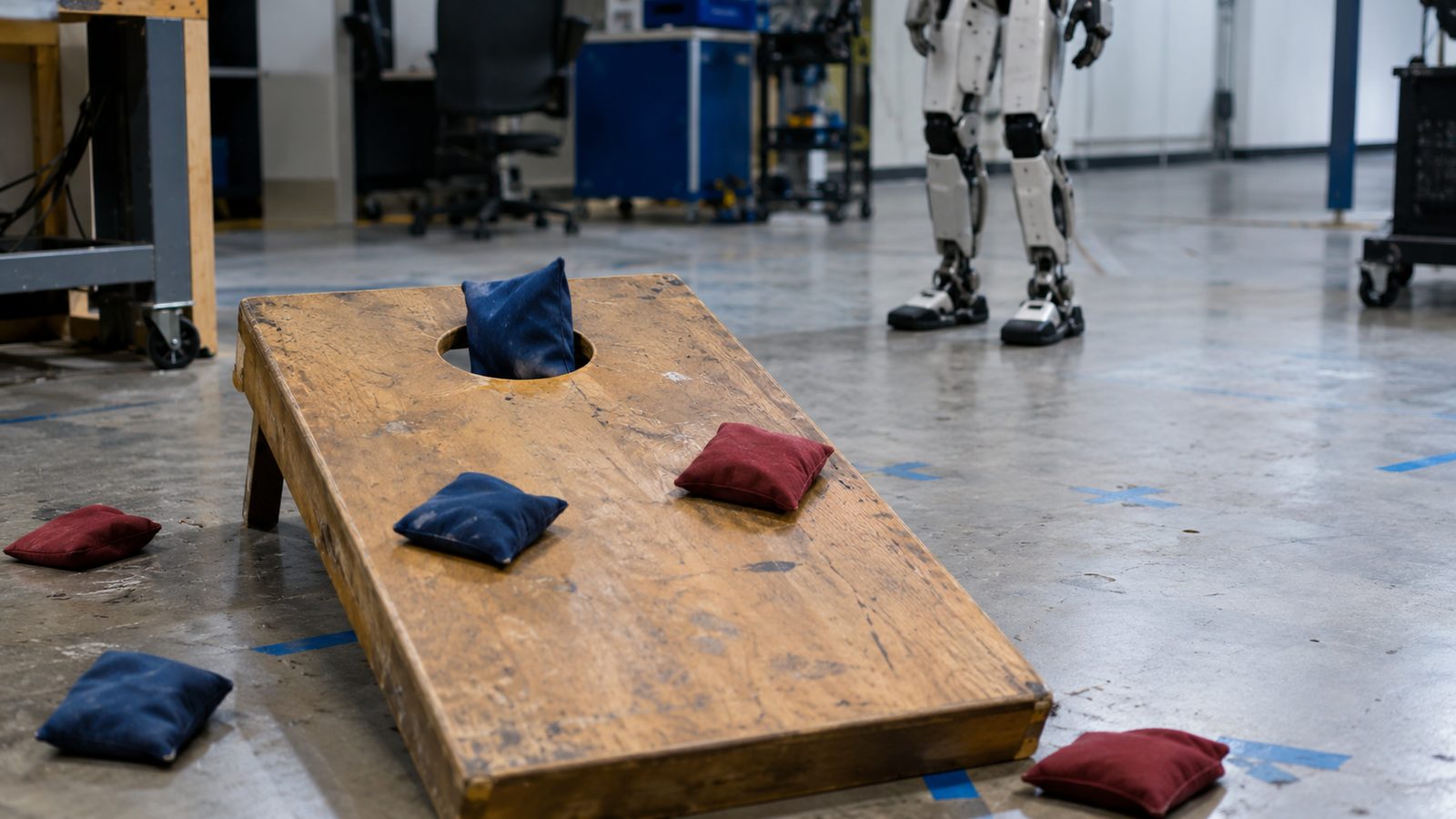
A humanoid robot stands at a cornhole board and sinks seven bean bags in a row. That is the clip Google DeepMind posted this month, and it has passed 1.6 million views. The robot is not the interesting part. The teacher is.
According to Google, nobody programmed the throw. Its new AI model, Gemini 4 Argon, watched a single video of a person playing. Then it worked out the rest on its own.
One video of a person was the whole lesson
Google released Gemini 4 Argon on October 13, 2026. It is the same kind of AI people chat with in the Gemini app, aimed this time at the physical world. The cornhole test was part of the launch.
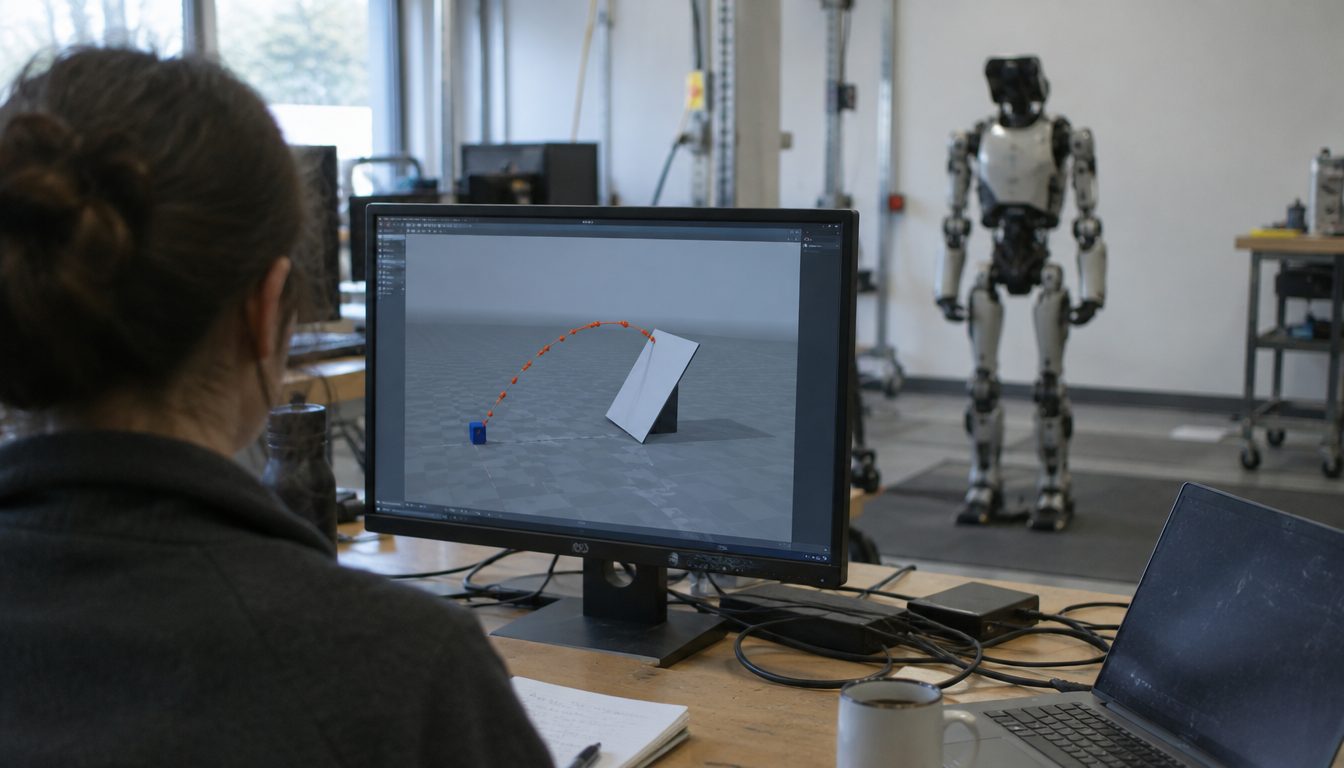
Here is the sequence Google describes. Argon watched a raw video of a human tossing bean bags. It mapped where everything sat in the scene and worked out how the body has to move to make the throw. Then it wrote its own practice world, a computer simulation of the game.
That simulation matters. A robot that practises for real breaks things, wears out joints and takes forever. In a simulation it can try thousands of throws in minutes. The hard part has always been building that practice world by hand. Google says Argon squeezes “weeks of manual simulation modeling into a few hours.”
The lessons were then moved onto Apollo, a humanoid built by the robot company Apptronik. In Google’s words, the robot “quickly sank seven consecutive shots in a real-world trial.”
The robot still needed a few real throws
Google’s launch post makes it sound instant. A DeepMind researcher who worked on it, Norman Di Palo, tells a slightly different story. He wrote that he was “still half in disbelief” at the result. In the same post he described the model taking control of the robot, building its own simulation and then training throws on the real machine. He also wrote that it took a few real shots before the streak began.
That is not a scandal. It is how this kind of training usually works. A simulation is never a perfect copy of real motors and a real bean bag, so the robot adjusts once it touches the real thing. But it is a different picture from “watched a video, nailed it.”
What Google did not say
Several things are missing from the public account, and Interesting Engineering flagged the two that matter most. Google has not said how far the robot stood from the board. It has not said how many throws it took in total. Nobody outside Google has repeated the test.
The headline numbers are also Google’s own. Argon scores 87% on a test of physical reasoning called ERQA, which Google built and Google reports. It may well be the best model on it. You just cannot check that from the outside yet.
Why a party game is worth your attention
Cornhole is a stand-in. The real promise is speed. Today, teaching a robot a new skill means engineers building a practice world for every single job. If an AI can build that world from an ordinary video, robots could pick up tasks far faster.
Apollo itself is a work robot, not a home helper. When Apptronik unveiled it, the company described a machine about 1.7 meters tall (roughly 5 foot 7) that lifts up to 25 kilograms, about 55 pounds. It runs around four hours on a swappable battery and was aimed at moving boxes and bins in warehouses and factories. You cannot buy one for your backyard.
So read the clip for what it is: a strong lab demo from the company selling the AI. It shows where robot training is heading. It does not yet show how well that holds up when someone else moves the board.
Sources
- Teaching a humanoid robot to play cornhole with Gemini 4 Argon (Google DeepMind, YouTube)
- Introducing Gemini 4 Argon (Google)
- Google's Gemini 4 Argon taught a humanoid robot to play cornhole (Interesting Engineering)
- Google demonstrates Gemini 4 Argon robotics on Apollo humanoid (Humanoid Guide)
- Norman Di Palo on the Argon cornhole demo (Digg)
- Apptronik's Apollo humanoid (IEEE Spectrum)