Ukraine became a proving ground for military robotics, where drones and autonomous systems shifted combat dynamics in real time. You witness this transformation not in theory but in daily battlefield reports, where small quadcopters spot targets, loitering munitions strike with precision, and unmanned ground vehicles evacuate wounded soldiers. A mid-sized SaaS firm could not prototype faster than Ukrainian units now adapt robotic tools under fire.
The Aerial Shift
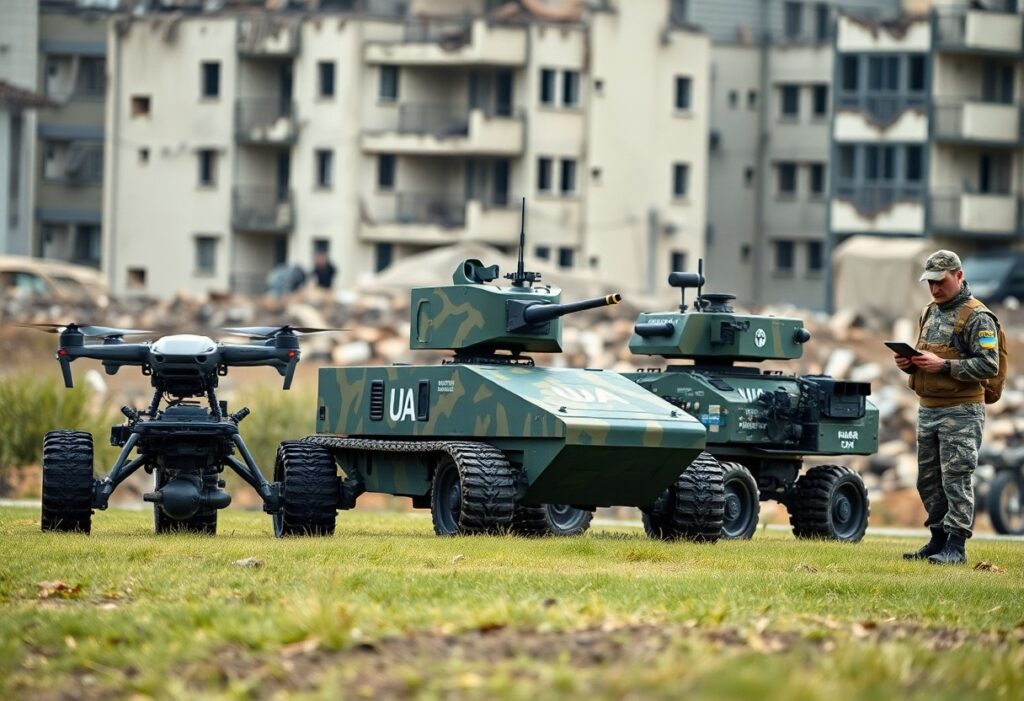
You now operate in an environment where drones dominate reconnaissance and strike missions, reshaping how engagements unfold above the battlefield. Ukrainian forces, initially relying on commercial quadcopters for spotting artillery, rapidly integrated long-range Iranian-designed Shahed variants and domestically produced models like the Punisher and Leleka-100. These systems perform real-time surveillance, deliver precision munitions, and saturate enemy air defenses through sheer numbers. A mid-sized SaaS firm developing drone telemetry software adapted its algorithms to support frontline units, illustrating how civilian innovation feeds into military capability. Swarms of low-cost UAVs now challenge traditional airpower, forcing adversaries to reconsider defense doctrines built around expensive, centralized platforms.
Terrestrial Autonomy
Your ground units now operate with unprecedented independence, guided by advanced sensors and real-time decision algorithms. Ukrainian forces have deployed robotic platforms like the Ukrainian-made VU-T100, capable of transporting supplies through contested zones without direct human control. These systems reduce exposure for personnel while maintaining logistical momentum across difficult terrain. Machine vision and GPS-denied navigation allow movement even under electronic warfare pressure, adapting routes based on environmental feedback. Some units integrate AI-driven obstacle avoidance, enabling traversal of forested or urban areas where traditional automation fails. Russian counterparts, such as the Uran-6 mine clearer, demonstrate similar capabilities but with less reported flexibility in dynamic environments. Your reliance on modular, open-architecture designs gives Ukrainian robotics an edge in rapid field adaptation, often incorporating commercial components to accelerate deployment cycles. Field reports indicate sustained operations exceeding 12 hours on a single charge, a marked improvement over earlier models limited to under four.
Maritime Disruptors
Unmanned surface vessels have redefined naval engagements in the Black Sea. You operate these low-cost, high-impact platforms to conduct surveillance, deliver explosives, or swarm enemy assets. A Ukrainian maritime drone recently damaged a Russian corvette near Snake Island, proving small autonomous craft can challenge established fleets. These systems rely on commercial components and adaptive routing to evade detection and interception.
Algorithmic Warfare
You operate within an environment where machine learning shapes targeting and decision speed, compressing the kill chain to unprecedented levels. Ukrainian engineers deploy custom algorithms to classify Russian vehicles in real time, feeding data from drones directly into artillery systems. Open-source tools allow rapid iteration, adapting to enemy camouflage and movement patterns within hours. As described in Networked for War: Lessons from Ukraine’s Ground Robots, this integration of AI into fire control loops marks a shift from automation to cognitive augmentation on the battlefield.
Decentralized Production
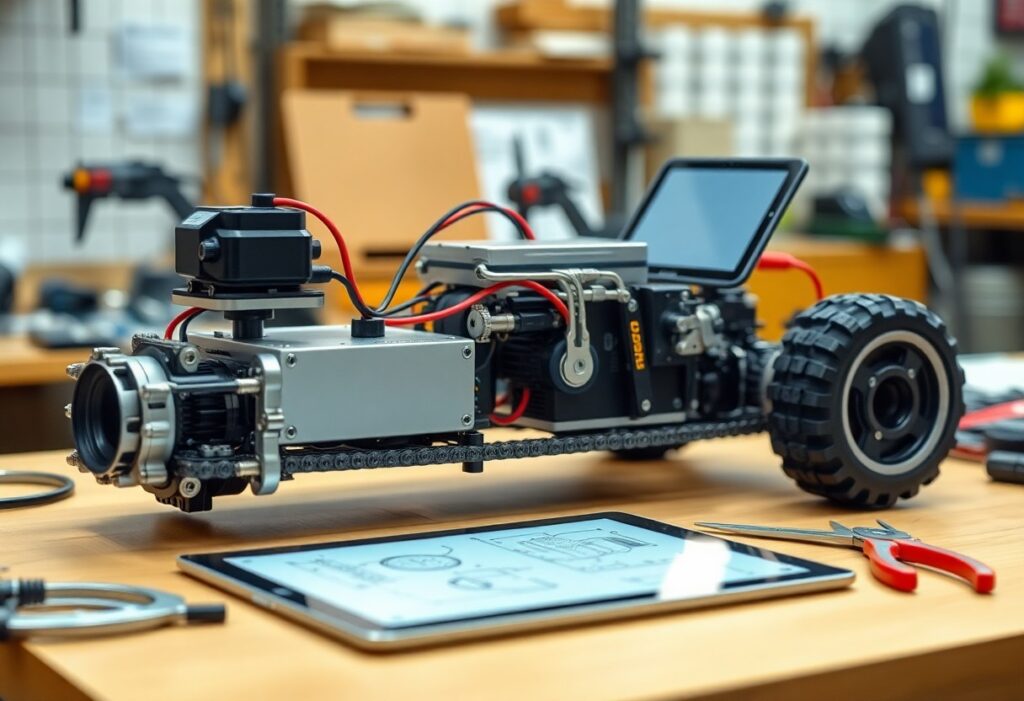
You adapt quickly when supply chains break under pressure, as seen when Ukrainian engineers began fabricating drone parts in repurposed workshops and garages. A single design might be produced across dozens of locations, each contributing components without centralized oversight. You rely on open-source schematics shared through encrypted channels, enabling rapid iteration and localized manufacturing. One mid-sized SaaS firm in Lviv retooled its CNC machines to produce rotor housings, while hobbyist networks 3D-print control mounts using consumer-grade printers. This distributed model limits single points of failure and accelerates deployment cycles, turning city-level workshops into de facto defense contractors. You no longer wait for factory deliveries; you build what you need, where you need it, often within 72 hours of a battlefield request.
Signal Contestation
You operate drones and robotic systems in an environment where GPS and radio signals are routinely jammed or spoofed. Electronic warfare units on both sides deploy portable jammers that disrupt command links, forcing operators to adapt flight paths or rely on pre-programmed routes. Ukrainian forces have modified commercial drones with encrypted transmitters and fallback navigation using visual-inertial systems to maintain functionality. Russian units have used signal detection to locate and target drone operators within minutes of transmission. Your ability to sustain robotic operations depends on staying ahead in this cycle of emission and suppression.
Final Words
You operate in a theater where drones no longer serve only as scouts but as persistent strike platforms, reshaping frontline dynamics daily. Ukrainian forces deploy repurposed agricultural bots for resupply, while 3D-printed gliders deliver explosives behind enemy lines. You adapt to a battlefield where algorithmic targeting reduces decision cycles to minutes, and garage-built robots challenge legacy systems. The war in Ukraine demonstrates that military robotics are no longer the domain of major powers but are accessible, modifiable, and decisive in decentralized hands. You now face an enduring reality: autonomy is no longer the future of warfare-it is its present.