Constructing DIY Robots with AI-Powered Automation
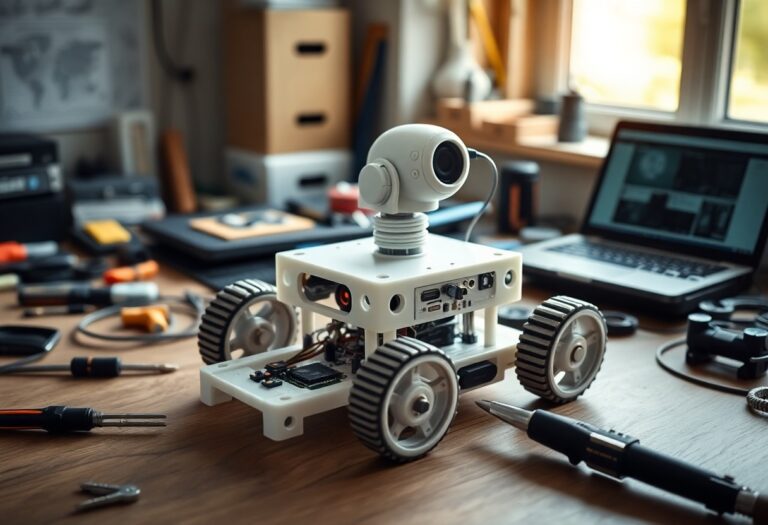
AI enables you to build functional robots at home using accessible tools and smart programming. You can integrate sensors, microcontrollers, and machine learning models to create machines that learn and adapt. This guide shows you how to design, assemble, and automate your own intelligent robots with practical, step-by-step methods.
The Silicon Cerebrum
Your robot’s intelligence begins with its central processing architecture. This silicon-based brain determines how quickly it senses, decides, and acts. Choosing the right combination of processing power and efficiency shapes everything from responsiveness to learning capability. Think of it as the foundation of autonomous behavior.
Selecting the Micro-Controller Core
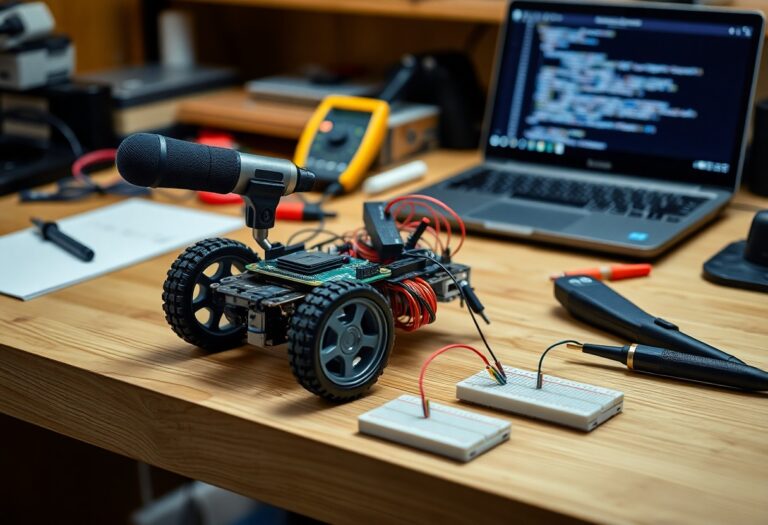
You weigh processing speed against power consumption when picking a microcontroller. Boards like ESP32 or STM32 offer real-time control and wireless connectivity, fitting compact AI tasks. Your project’s complexity guides whether you need basic GPIO handling or multitasking support. Match the chip’s capabilities to your robot’s intended autonomy.
Integrating Neural Processing Units
You connect dedicated NPUs to accelerate machine learning inference on-device. These chips handle image recognition or voice processing faster than general-purpose CPUs. Offloading AI tasks to an NPU improves response times and reduces latency in decision-making. Compatibility with your main controller ensures smooth data flow.
Adding a Neural Processing Unit means your robot interprets sensor data in real time without relying on cloud servers. Devices like the Google Coral Edge TPU or Kendryte K210 enable on-board deep learning, letting you run TensorFlow Lite models locally. This integration supports advanced behaviors like object tracking or gesture recognition while maintaining low power use and faster feedback loops tailored to dynamic environments.
The Art of Kinetic Form
Every robot you build reflects a balance between motion and structure, where design meets function in dynamic harmony. You shape movement through form, ensuring each component supports fluid, purposeful action. Curious how to integrate intelligence into this motion? Learn more by exploring How can i link an AI to my robot? for practical insights from fellow builders.
Structural Integrity of the Chassis
Your robot’s chassis must withstand operational stress while maintaining alignment under movement. Choose materials like aluminum or reinforced polymers to ensure durability without excess weight. A rigid frame allows sensors and electronics to stay calibrated, especially during dynamic tasks.
Precision Actuators for Locomotion
Each actuator you install determines how smoothly your robot responds to AI commands. Servos and stepper motors offer controlled motion, necessary for accurate navigation and interaction. Matching torque and speed to your robot’s size ensures reliable, repeatable movement.
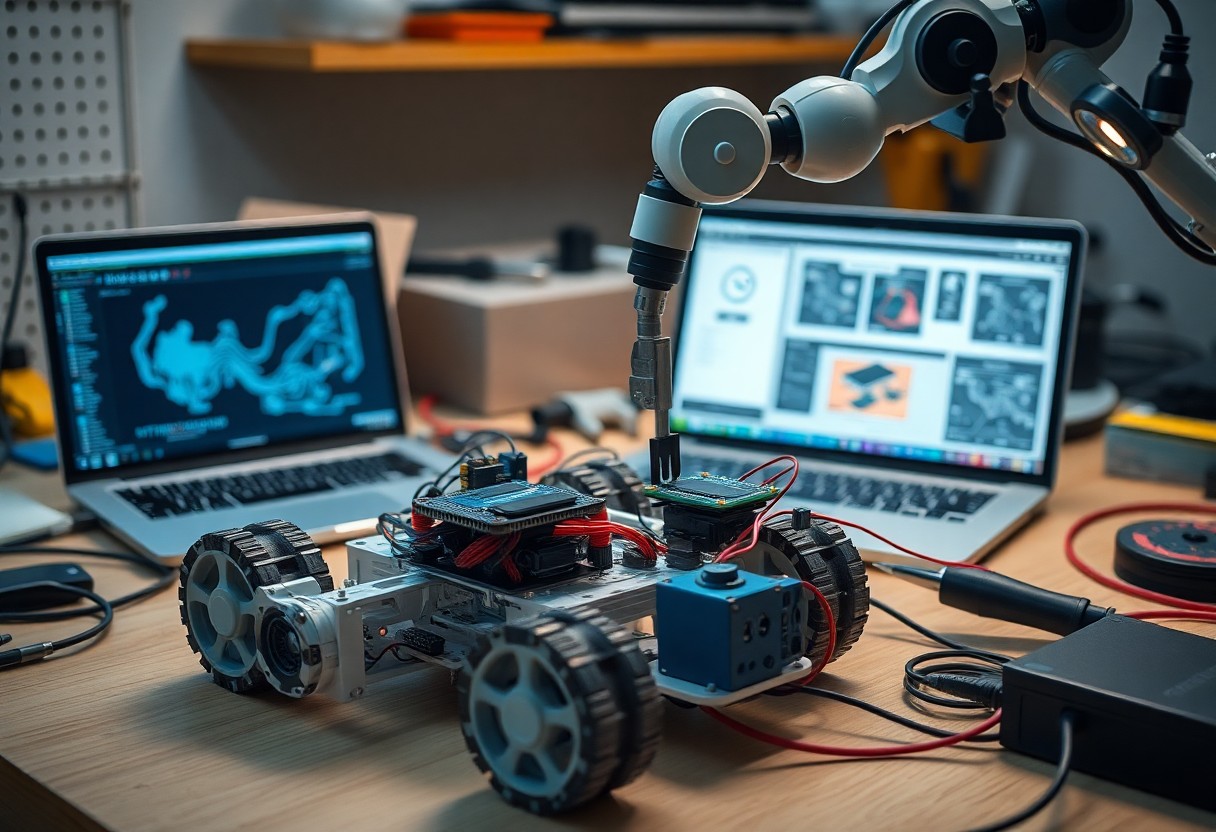
Precision actuators go beyond basic motion-they translate AI decisions into exact physical responses. When your robot processes environmental data, the actuators must react with minimal latency and high repeatability. Using closed-loop systems with feedback sensors allows real-time adjustments, improving stability on uneven terrain or during object manipulation. Pairing these with efficient motor drivers ensures power is delivered only when needed, extending battery life without sacrificing performance.
Sensory Perception Arrays
Your robot’s ability to interact with its environment begins with sensory perception arrays. These systems combine inputs from multiple sensors to form a coherent understanding of surroundings, enabling responsive and intelligent behavior. You’ll rely on them to transform raw data into actionable insights.
Visual Input and Object Recognition
Cameras feed visual data to onboard processors where AI models identify shapes, colors, and objects in real time. You train these models to recognize specific items, allowing your robot to distinguish a cup from a book or detect obstacles in its path.
Spatial Awareness and Proximity Detection
Ultrasonic and infrared sensors measure distances to nearby objects, giving your robot an immediate sense of space. You use this data to prevent collisions and adjust movement dynamically as obstacles appear.
Active sensing through LiDAR or time-of-flight modules enhances your robot’s spatial awareness, mapping nearby surfaces with precision. You process these depth readings alongside motion data to maintain orientation, enabling smooth navigation even in cluttered environments. This layered perception mimics natural spatial reasoning, making autonomous decisions more reliable.
The Logic of Automation
You design automation to mimic human reasoning, translating actions into repeatable sequences. Each robot follows structured logic that responds to inputs with precision. By defining clear conditions and outcomes, your system executes tasks without constant oversight. This foundation allows even simple DIY robots to perform complex behaviors reliably.
Scripting Autonomous Decision Loops
Your robot makes real-time choices by evaluating sensor data against predefined rules. These loops run continuously, allowing the machine to adapt to changes in its environment. You write concise scripts that trigger actions based on thresholds, creating responsive behavior without manual input.
Refinement of Predictive Algorithms
Your model improves over time by analyzing past performance and adjusting future predictions. Small tweaks to parameters increase accuracy in anticipating outcomes. You rely on feedback from each operation to fine-tune how the robot interprets incoming data.
Each iteration of your predictive algorithm incorporates new data points gathered during operation, sharpening its ability to forecast correct responses. You monitor error rates and adjust weighting factors to reduce inaccuracies. Over time, your robot distinguishes patterns more effectively, enabling smarter decisions with minimal human correction. This continuous learning cycle transforms basic automation into intelligent behavior.
Safety Protocols and Ethics
Building DIY robots with AI demands responsibility. You must design systems that prioritize human safety, respect privacy, and operate within ethical boundaries. Every decision you make-from sensor placement to data handling-shapes how your robot interacts with the world. Always anticipate unintended behaviors and plan accordingly.
Implementing Behavioral Constraints
You define your robot’s limits through coded rules and AI guardrails. Set clear boundaries for movement, interaction, and decision-making to prevent harmful actions. Use real-time monitoring to detect deviations and trigger corrective responses, ensuring your robot behaves predictably in dynamic environments.
Power Management and Fail-Safes
Your robot’s reliability depends on stable power and smart shutdown protocols. Integrate voltage monitors and low-power alerts to avoid sudden failures. Design automatic fallback modes that engage during outages or system errors, preserving safety even when performance degrades.
Efficient power management goes beyond battery life-it’s about system integrity. You should incorporate redundant circuits and current-limiting components to protect sensitive electronics. Program your robot to reduce non-necessary functions when power drops, maintaining core operations like braking or obstacle detection until safely powered down.
Final Words
On the whole, building DIY robots with AI-powered automation puts advanced technology within your reach. You gain hands-on experience shaping intelligent machines that sense, decide, and act. With accessible tools and open-source frameworks, your projects evolve from simple mechanics to adaptive systems. This fusion of creativity and code empowers you to bring functional robotics to life.