What a Chinese Humanoid Robot Really Costs — and Why the Sticker Price Lies
You can order a walking humanoid robot right now for $4,290. You can also pay $73,900 for a machine barely taller than a kitchen counter. Both are real, published prices. Neither one tells you what you would actually spend.
Chinese companies build most of the humanoids being sold today, and they price them the way airlines price seats. The number in the headline is the cheapest version, in the cheapest place, with the fewest parts attached. Here is how that number gets built, and what gets bolted on afterwards.
The headline price is one configuration, not one robot
Take the best-known example. The pricing guide RobotSourced, which tracks manufacturer and dealer listings, puts the basic Unitree G1 at $13,500 direct from the maker. That robot is 127 cm tall — about 4 foot 2 — and weighs 35 kg.
The same robot in its research trim starts at $43,500, and the top build runs to $73,900. The jump is not mostly about metal. It is about whether you are allowed to write your own software for it.
The cheap version ships without developer access — the toolkit a maker gives you to program a machine (a software development kit, or SDK). Without it, you can make the robot walk and wave. You cannot teach it anything. RobotSourced calls the basic model essentially a demonstration unit, and warns buyers not to expect research capability from it.
Not everyone charges that way. Booster Robotics starts its education humanoid at $5,999 with full developer access included, which is the single biggest reason to look past the headline figure.
Hands, batteries and the things that are not in the box
Fingers cost money. The expensive G1 builds are expensive largely because they carry multi-jointed hands instead of simple grips. On most price lists, hands are an option, not a given.
Power is the other quiet line item. A G1 runs about two hours on a charge — roughly a quarter of a work shift. Spare packs run around $800 each, so a robot that works all day is a robot that needs three or four batteries.
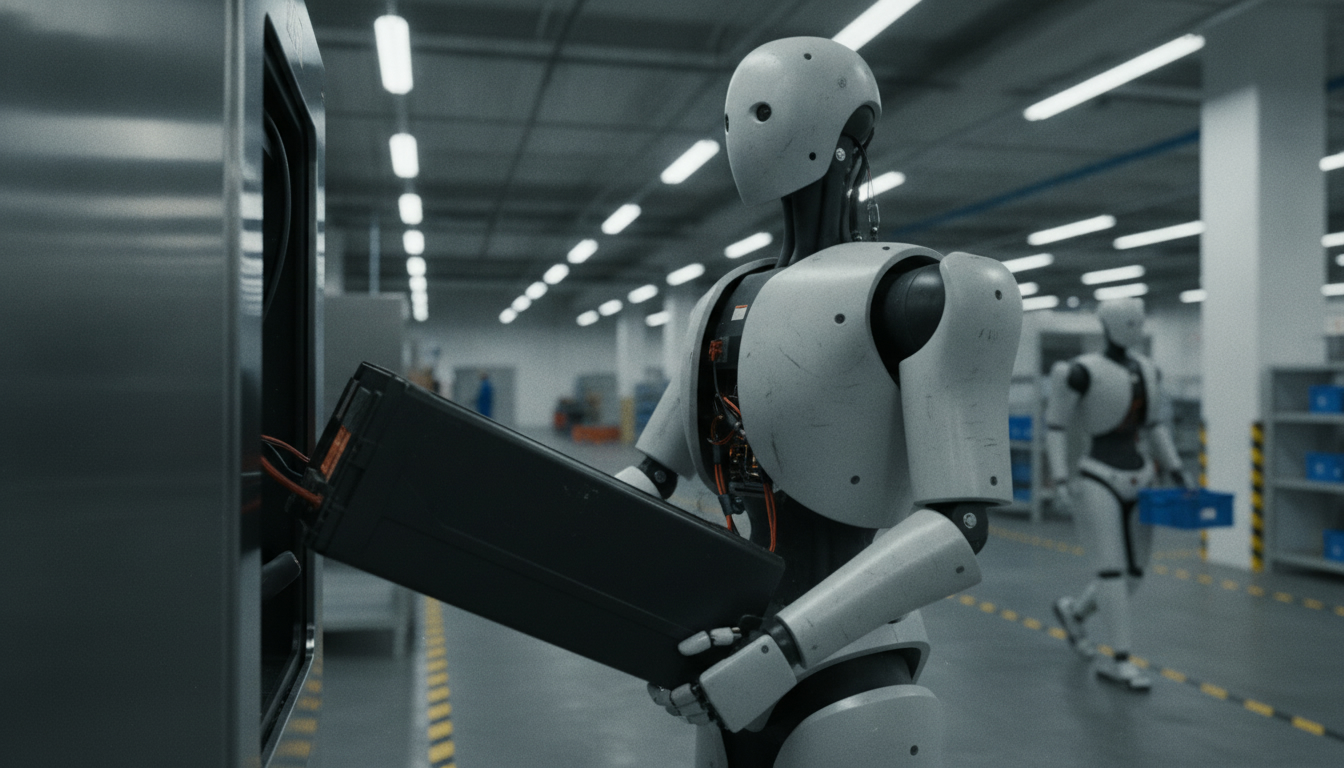
Makers are selling their way out of this. EngineAI claims its T800, from $25,000, runs four to five hours on a solid-state pack. UBTECH says its factory humanoid swaps its own battery in about three minutes. Those are company claims, and they come attached to much bigger prices.
Watch the lifting numbers too. The AgiBot X2 is listed at $24,240 with a 3 kg payload — but that 3 kg only holds in favourable arm positions, and drops under 1 kg across its full reach. That is a bag of sugar, at arm’s length, on a good day.
Then add the distance between a Chinese factory and your door
A price listed in Hangzhou is not a price in Ohio. The same base G1 that lists at $13,500 direct shows up at US dealers nearer $17,990 — about a third more before you have touched it.
Supply is the next surprise. That model sat on backorder in mid-2026, and replacement parts from China typically take six to eight weeks. A broken robot is a very expensive shelf ornament for two months.
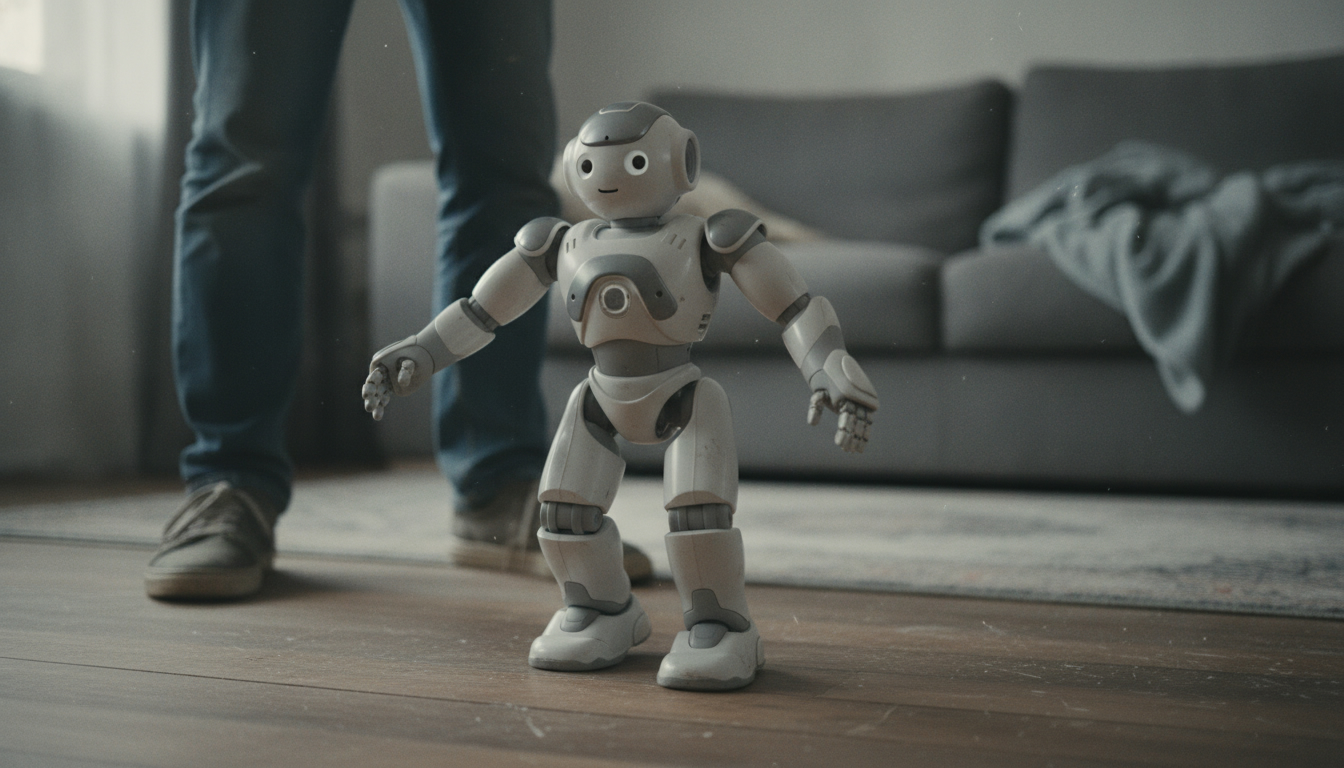
Prices also move fast. The G1 launched at $16,000 and was cut to $13,500 in late 2025. Margins at the bottom of the market are thin by the makers’ own admission: when Noetix launched its 94 cm, 12 kg Bumi at 9,998 yuan — about $1,400 — founder Jiang Zheyuan told reporters margins were “indeed quite low”. More than 200 sold in three hours.
Three questions to ask any cheap-robot headline
- Can I program it, or only drive it? If developer access is a paid upgrade, the real price is the upgrade price.
- What is on the ends of the arms, and how long does it run? Hands and spare batteries are usually extra.
- Is that the price at my door? Dealer markup, shipping, support and a two-month wait for parts all belong in the total.
My read of the current lists: anything under $10,000 is a teaching and demonstration machine, not a worker. Sub-$10,000 humanoids arrived years earlier than most forecasts expected. A sub-$10,000 humanoid that earns its keep has not arrived at all.
Sources
- Humanoid Robot Prices: From $4,290 to $170,000+ (2026 Guide) — RobotSourced
- Unitree G1 Humanoid Robot — price, specs and configurations — RobotSourced
- China's robot makers race to roll out low-cost humanoids – but is it sustainable? — South China Morning Post
- China unveils world's cheapest humanoid robot under $1,400 — Interesting Engineering