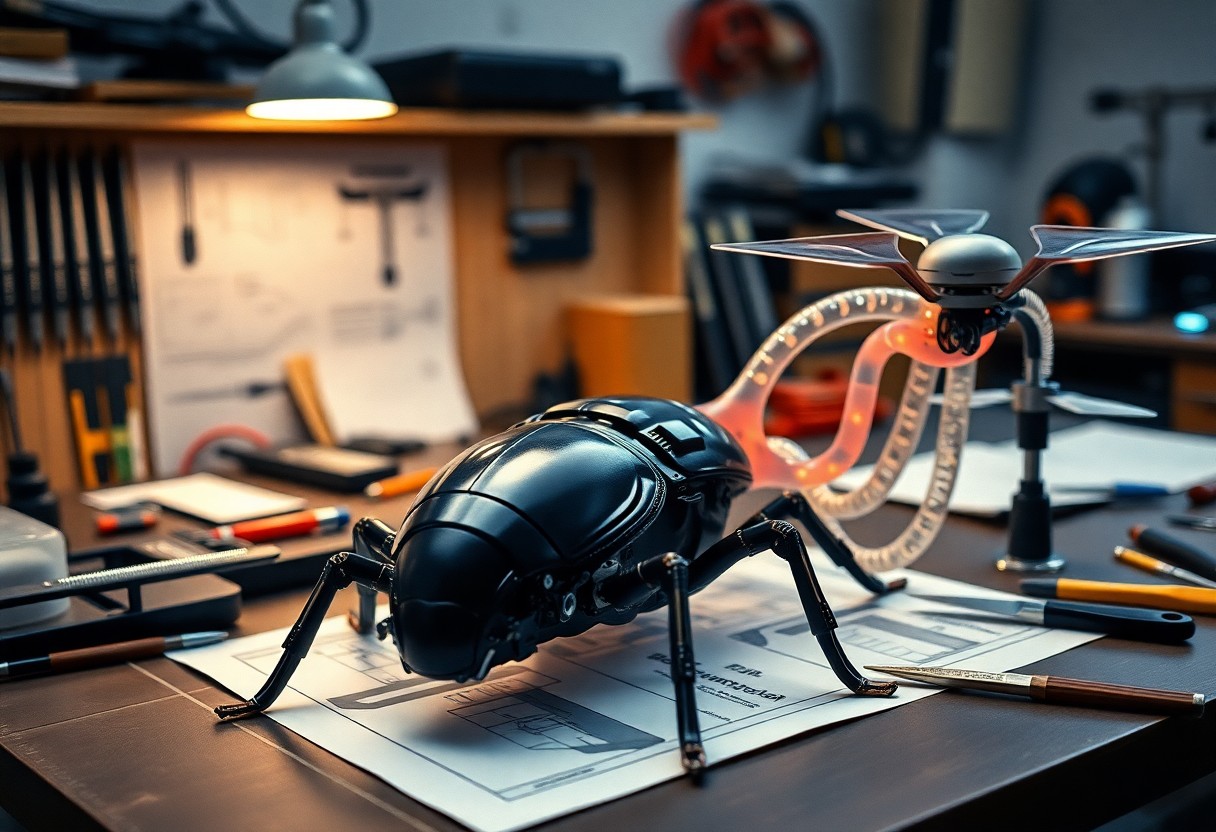
With millions of years of evolutionary refinement, nature offers proven solutions to movement, sensing, and adaptation that you can apply directly to robotics. By observing animals, insects, and natural systems, you design machines that walk like insects, fly like birds, or grip like plant tendrils-achieving efficiency and functionality that traditional engineering often misses. The Biological […]
Category: Ethics in Healthcare

How to Build a Humanoid Robot Prototype
Over the past decade, humanoid robotics has moved from research labs to accessible DIY projects. You can build your own functional prototype by selecting the right frame materials, integrating servo motors for joint movement, programming basic locomotion, and using sensors for environmental awareness. This guide walks you through each step with precision and clarity. Assessing […]

Prototyping Techniques for Robot Construction
There’s a toolkit of prototyping techniques for robot construction that lets you rapidly test mechanics, iterate control systems, validate sensors, and shorten development cycles with physical mockups, 3D-printed parts, simulation, and modular electronics. Rapid Mechanical Fabrication You combine quick frame milling, modular joints, and low-cost printed fixtures to validate kinematics, load paths, and basic function […]

Assembly Tolerances and Their Impact on Robot Accuracy
Just consider how micrometer-level misalignments alter kinematics and repeatability; you must specify tight assembly tolerances, inspect fits, and control stack-up to prevent cumulative positional errors that degrade robot accuracy. Fundamentals of Geometric Dimensioning and Tolerancing (GD&T) GD&T guides you in specifying allowable variation, defining form, orientation, and position controls that determine assembly fits and robot […]