How a Humanoid Robot Keeps Its Balance When You Push It
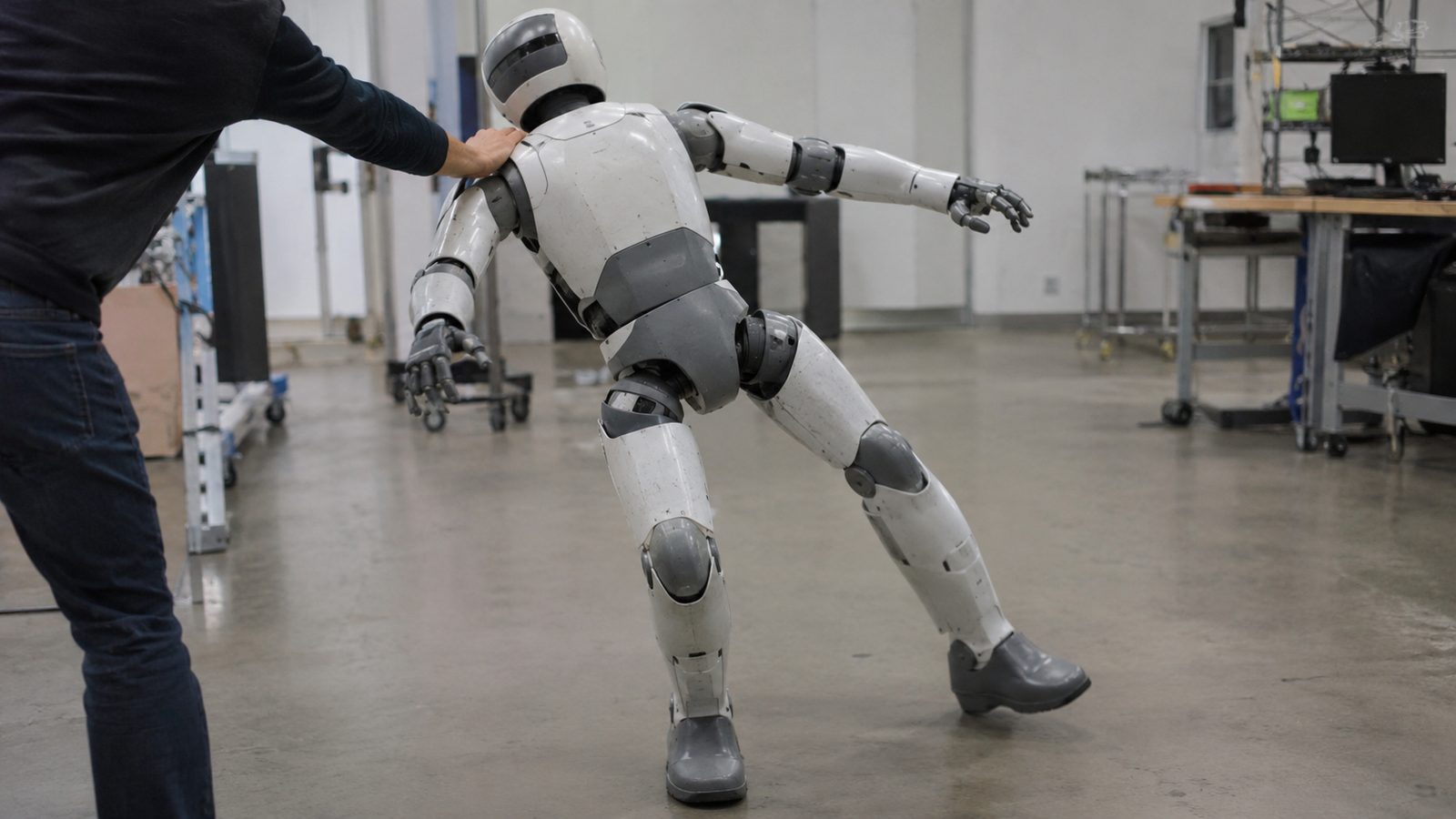
Shove a person gently and they barely move. Shove harder and they bend at the waist, swing their arms or take a quick step. A two-legged robot that recovers well does the same three things, in roughly the same order.
Researchers call them the ankle, hip and stepping strategies. A 2016 paper by engineers at two universities in Tehran describes all three as copied from how people react. Once you know the three moves, you can watch any push-test video and tell what the robot is actually doing.
A walking robot is a broom balanced on your hand
Try balancing a broom upright on your palm. It always wants to fall, so you keep moving your hand under it. Engineers picture a two-legged robot the same way: a heavy weight on top of a stick, with the foot at the bottom. The paper says this simple picture works well for a real humanoid, especially when it is standing still.
The picture also shows why a push is dangerous. A robot touches the floor only with its feet, so the area it can safely lean over is small. Think of the patch under and between the feet. If a push moves the robot’s weight past the edge of that patch, the robot falls unless something moves.
To react at all, the robot has to feel what is happening. It carries sensors that notice the body tilting, a bit like your inner ear. It also has sensors that feel how pressure shifts under its feet. Stand on a bathroom scale and rock forward: you feel the weight move to your toes. The robot tracks that same shift, many times a second.
A small push is handled at the ankles
For a light shove, the robot stays put and works its ankles. It presses harder through its toes or heels and steers its weight back over the middle of its feet. From outside, you see a slight sway and nothing else.
This move has a hard limit. A foot can press down on the floor, but it cannot pull up on it. The paper explains that if the ankle pushes too hard, the pressure ends up at the very edge of the foot, and the foot starts to tip. In a video, that looks like a heel or toes peeling off the floor.
Bigger pushes need the upper body, then a step
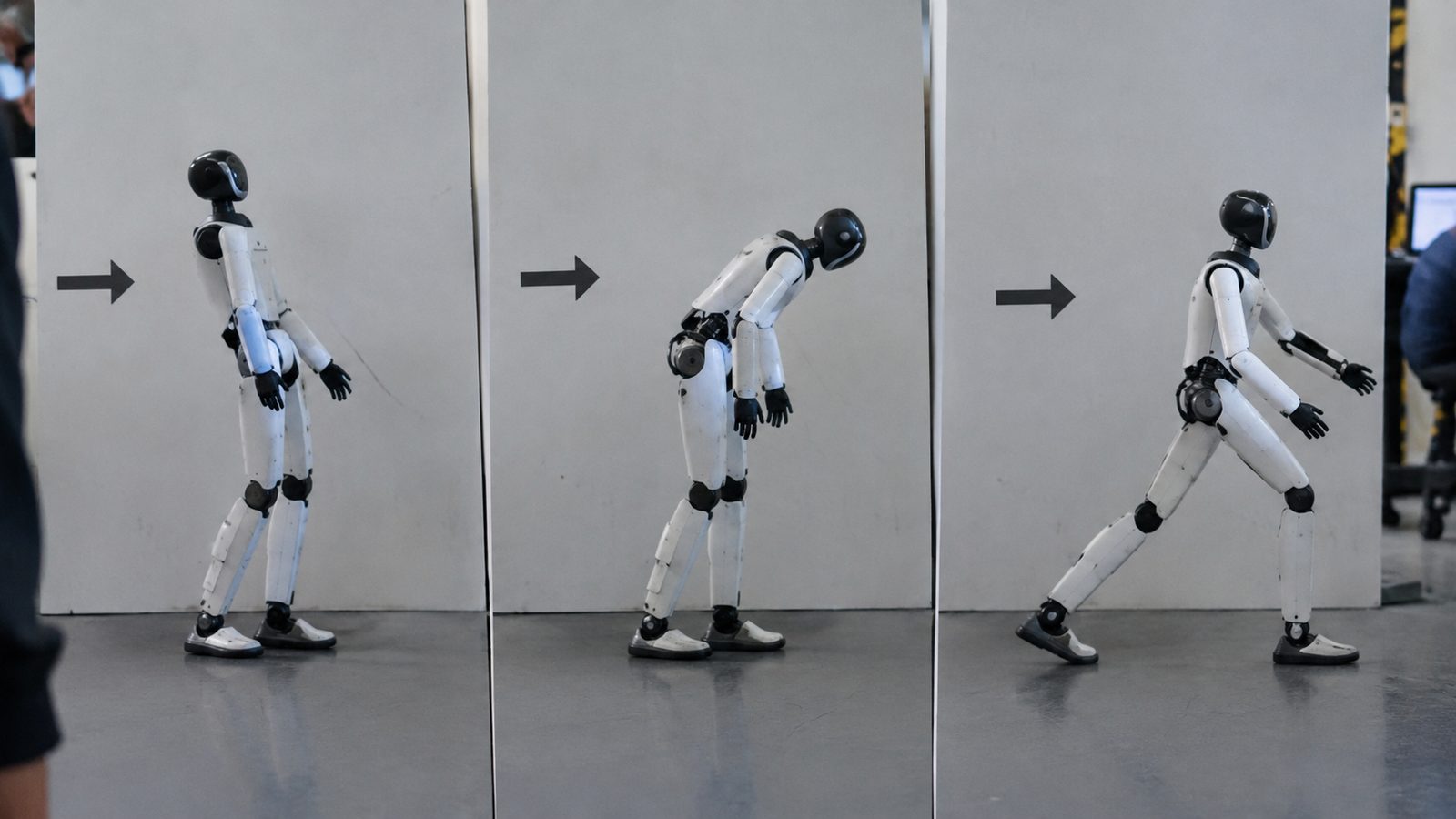
Next comes the hip strategy. The robot bends sharply at the waist or swings its arms. Throwing the upper body one way pushes the rest of the body the other way, which buys a moment. You do the same thing on an icy sidewalk when your arms windmill.
For the hardest shoves, the robot has to step. The key idea here is the capture point. That is the spot on the floor where the robot must put its foot to come to a full stop. The paper says it “specifies when and where a humanoid must step” to stay upright. If the foot lands there in time, the robot stops. If it misses, the robot needs another step, or it falls.
Robots fall when they run out of room to step
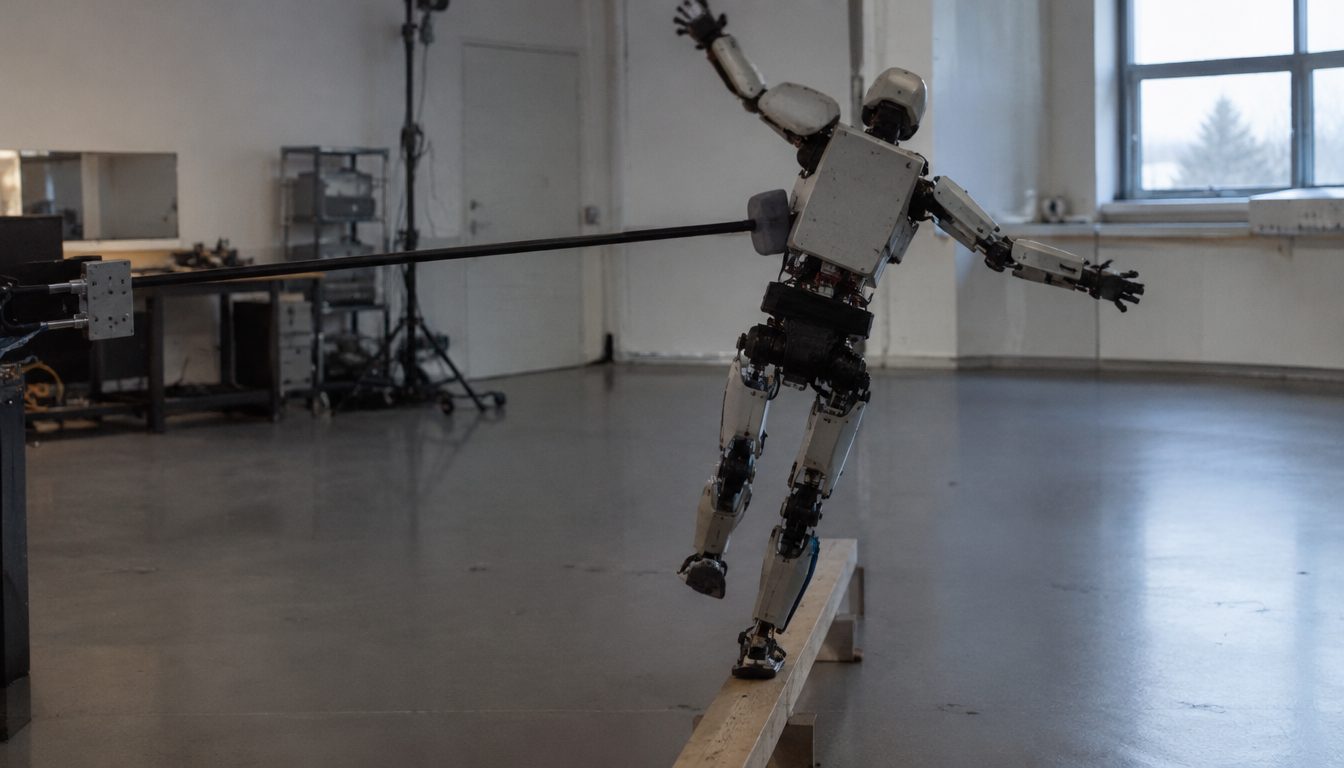
Stepping is the strongest move, but it is not always possible. The paper names cases where there is nowhere to step, such as when the robot only has narrow spots to put its feet. Then the ankles and upper body have to do all the work, and they can take much less.
The researchers tested exactly that, in a computer simulation. Their virtual robot stood on one leg, touching the ground along just a line. It recovered from a shove of 350 newtons that lasted one twentieth of a second. That is roughly the pull of a 79-pound weight, but only for a blink. Remember that this was a simulation, not a real machine.
The simple broom picture also leaves things out. For example, it assumes the robot’s body stays at one height. Real robots crouch, slip and twist. So every balance plan is a good guess, and the bigger the surprise, the worse the guess.
A real push test shows feet, steps and no hidden cuts
- Watch the feet first. A small sway with flat feet is the ankle strategy. A lifting heel means the ankles have hit their limit.
- Watch the waist and arms. A quick bend or arm swing is the hip strategy at work.
- Count the steps. One clean step to a dead stop is the best sign. A string of shuffling steps means the robot misjudged where to put its foot.
- Note the push. A tap from the front is easy. A hard shove from the side, or one while the robot stands on one leg, is the real test.
- Check that it is a real machine. Many balance results, including this paper’s, come from simulations.
- Look for safety ropes, overhead frames and cuts. A cut right after the push can hide a fall.
- Look for repeats. One save might be luck. Several in a row, from different directions, are convincing.
The step tells you the most. A robot that only sways has shown you its ankles. A robot that takes one well-placed step after a real shove, then stands still, has done the hard part.