How Your Robot Vacuum Knows Where the Stairs Are, and When Dust Fools It
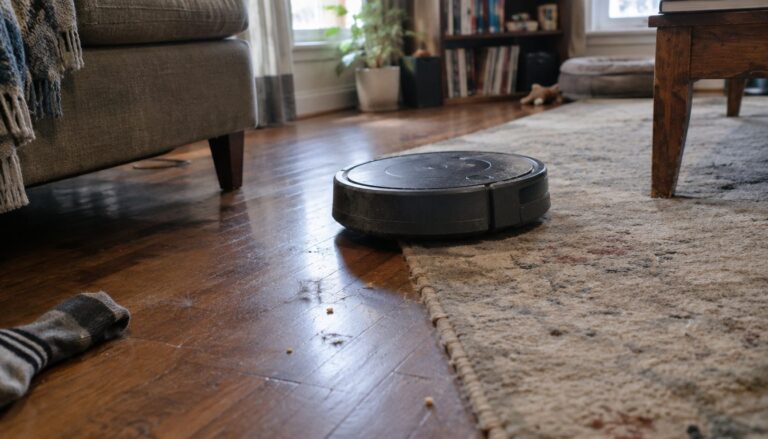
Your robot vacuum knows when the floor ends. It does this with small lights aimed down at the floor, not with eyes.
Those lights are what keep the machine from rolling down your stairs. When they get dirty or fail, the robot can make mistakes in both directions.
How the robot knows the floor is there
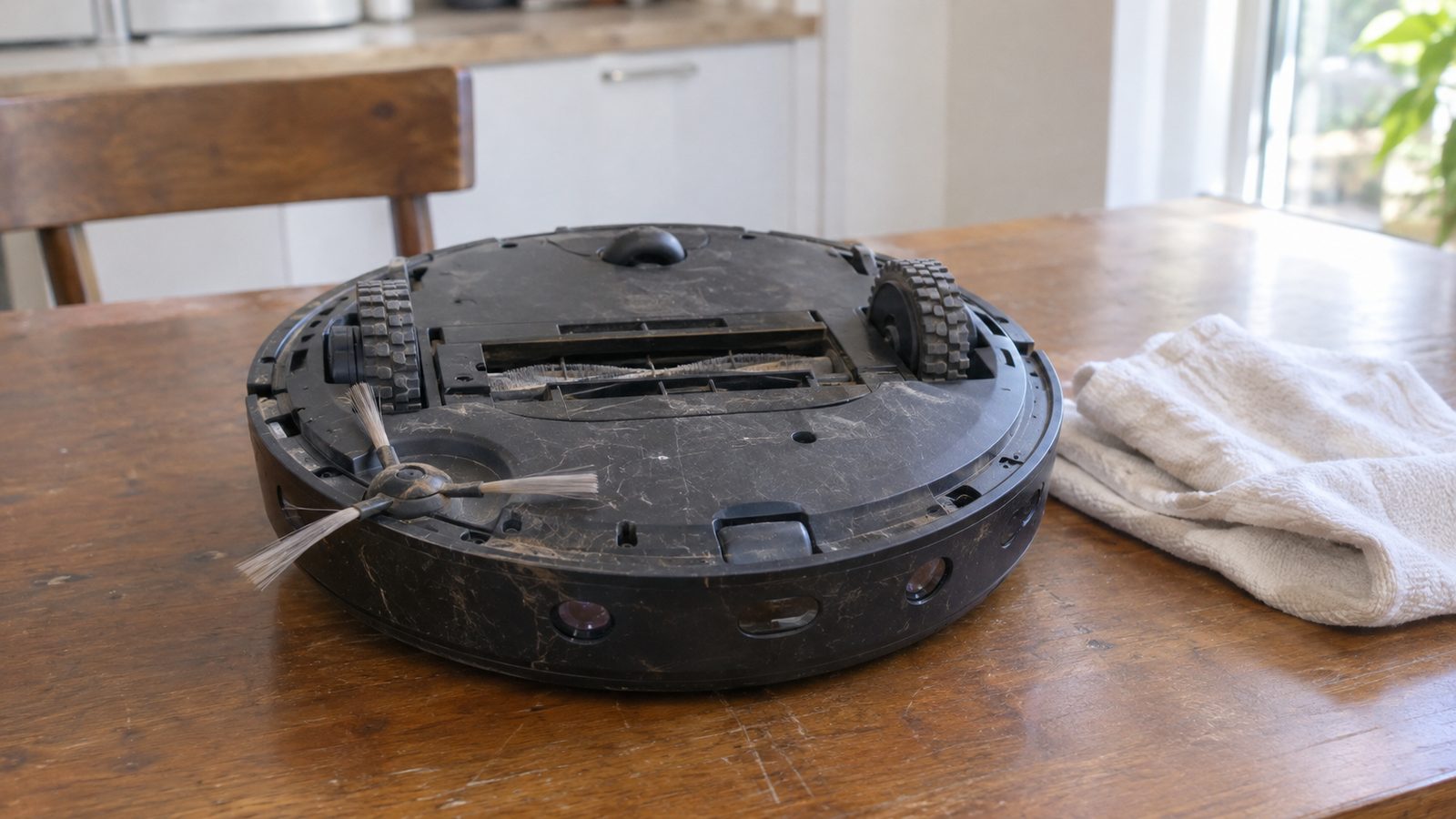
Turn a robot vacuum over and look at its underside. Near the front edge you will see several small round windows. Behind each one sits a light that shines down at the floor.
The light is infrared, which means your eyes cannot see it. Think of it as a tiny flashlight that only a sensor can read. A floor bounces that light back up to the sensor.
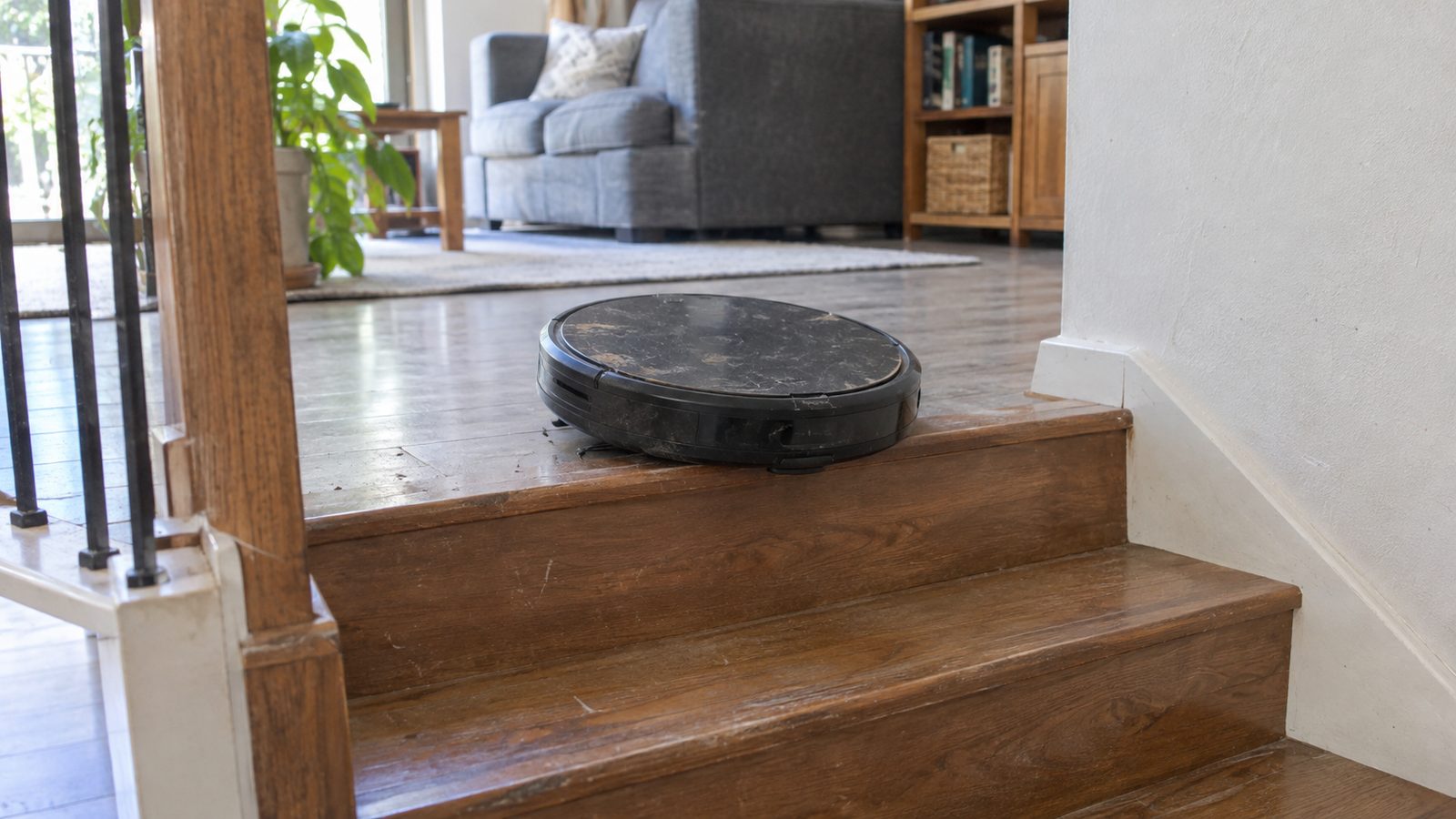
Now picture the top of a staircase. The light shoots past the edge, and nothing bounces back. The robot reads that missing bounce as a drop. It stops, backs up a few centimeters, and turns away, according to Eufy’s guide to stairs.
Why a dirty lens can look like a staircase
The sensor cannot tell a smudge from an empty drop. Dust on the window weakens the light that comes back. The robot then reads the floor as gone.
Eufy says dirty sensors can make a robot misjudge a drop, especially near stair landings. That is the first thing to check. A robot that stops for no reason in the middle of a flat room often has a dirty window.
How to clean the sensors in a few minutes
Turn the robot off and flip it over. Wipe each window with a dry microfiber cloth. Eufy also says to clean the front caster wheel and the side wheels.
Stubborn grime needs a little more. Dampen the cloth lightly with 70% isopropyl alcohol, which is rubbing alcohol. Wipe, then let it dry right away.
LG advises a cotton swab or soft cloth. It warns against paint thinner and acetone, because those can damage the robot. Use only the gentle options.
Test the sensors before you trust the robot again
TP-Link’s support page describes a simple test. Turn the robot upside down, press Start, and watch the main wheels. The wheels should stop after a short spin, and an alarm should sound.
If the wheels keep spinning, the sensors are not doing their job. Clean them and run the test again. If the wheels still do not stop, LG says a damaged sensor needs a service technician.
Dark floors and stairs still need a plan
Dark floors can fool the sensor. Eufy says dark flooring can absorb the light and look like a hole. TP-Link says its robot is not suitable for black floors.

Shiny floors can scatter the beam. Direct sunlight can overwhelm the sensors. Raised rug edges and thick thresholds can block them, according to Eufy.
Do not rely on the sensor alone at stairs. TP-Link advises blocking the stairs with a physical barrier before the first map. Then set a no-go zone in the app so the robot keeps away.
Here is the honest take. The sensor is a good idea that works most of the time. Every guide on it comes from a robot maker, and none gives a failure rate. So nobody outside the company can say how often it misses a stair.