How Lidar Works in a Robot Vacuum, and Why Some Robots Skip It
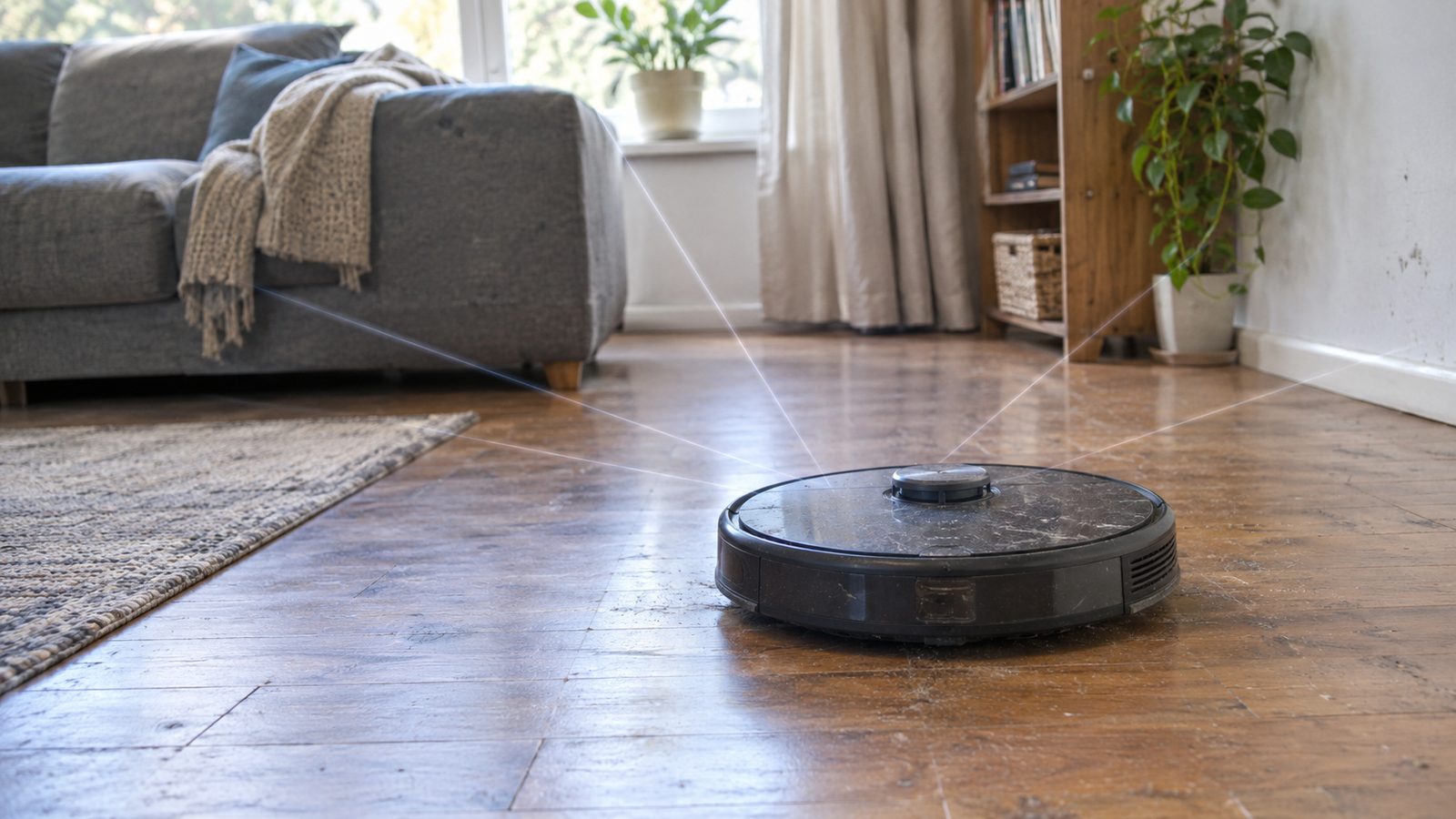
Your robot vacuum is heading for a table leg. Does it know the leg is there? Some robots answer that with a spinning laser. Others answer with a camera. The laser type is called lidar, short for “light detection and ranging.”

How a laser measures distance
The sensor sends out a very short flash of laser light. The light hits something and bounces back. The sensor times the trip. Light is so fast that the time tells the sensor how far away the thing is.
Think of a bat in a dark room. A bat makes a sound and listens for the echo. Lidar does the same job with light instead of sound. NOAA, the US ocean and weather agency, describes lidar as a pulsed laser that measures distances.
On a robot vacuum, the sensor sits on top. Ecovacs, a robot vacuum maker, says its sensors fire pulses in all directions, very quickly. Each reading becomes a dot. Many dots together form a map of the walls, the chair legs and the sofa.
Why the laser map is precise
The map shows exactly where walls and furniture sit. Ecovacs says that precision helps the vacuum clean faster and avoid no-go zones. A no-go zone is an area you mark so the robot stays out.
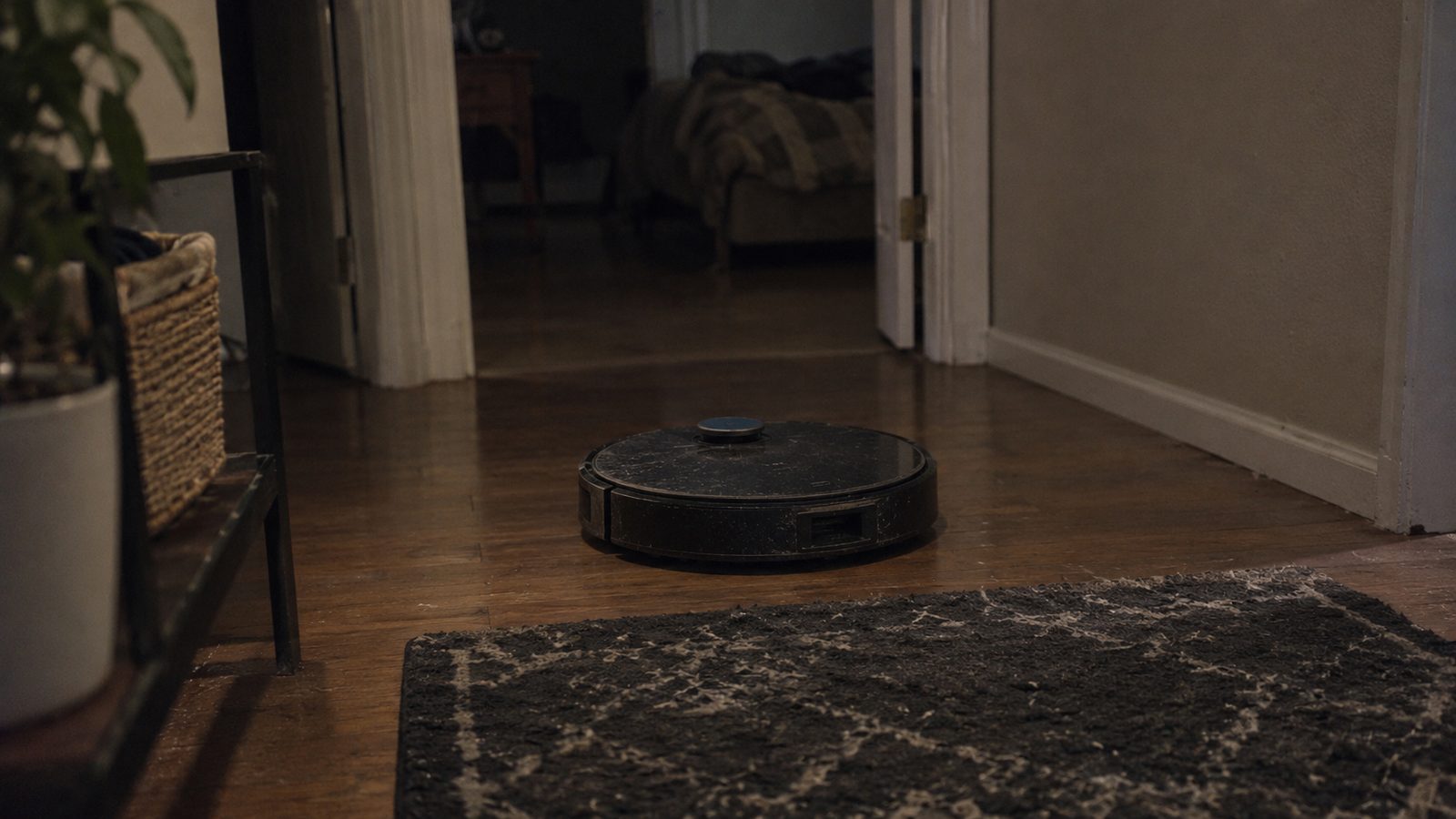
The laser brings its own light, so it works in a dark room. Ecovacs says lidar robots perform well in low light. A camera robot cannot say the same. iRobot, the Roomba maker, says its camera is “not bright enough to allow the robot to run in the dark.”
Lidar has a weak spot too: dark, dull surfaces. A 2023 study by ETH Zurich, a Swiss university, tested laser sensors on black and white material. Some black test objects were nearly invisible to the laser, even up close. The laser’s range fell to 33 percent of normal on those surfaces. Radar, which uses radio waves, and depth cameras kept up to 100 percent.
That study used car-sized sensors, not vacuum sensors. Treat the numbers as a warning, not as a spec for your home.
How a camera robot finds its way
A camera robot works a bit like a person learning a room. It spots landmarks, such as a door frame or a corner. It remembers where they are. Each time it leaves its base, it checks those landmarks to know where it stands.
Engineers call this method vSLAM, which stands for visual simultaneous localization and mapping. Digital Trends describes it for Roomba models. The robot looks for unique spots, remembers them, and uses them to orient itself.
Newer iRobot camera models can spot cords, pet waste and socks. The robot then sets a temporary keep-out zone around them. iRobot says the Mini and 515 have no camera at all.
What goes wrong, and how you would notice
A laser robot can bump into a dark mat or a black chair leg. You would see it hit something it should have avoided. That is a sign the dark surface fooled the sensor.
A camera robot struggles when the room is dim. You would see it wander, miss spots or stop short of a cord. On some j-series models, iRobot turns off PrecisionVision during a mapping run. Clear the cords and pet waste before you send it out to learn your home.
How to judge a robot on the shelf
Do not ask only “laser or camera?” Ask what the robot has to handle in your home. Check the maker’s list of things it avoids. Check whether it has a mapping mode. Then ask how it does in a dim room.
Here is our read. A laser map suits a dark home or a large open floor. A camera suits a home full of cords, socks and pet toys, as long as the lights are on. Most of the evidence still comes from the makers’ own tests.
Sources
- NOAA Ocean Service: What is lidar?
- ECOVACS: LiDAR vs vSLAM, Key Differences Explained
- Lötscher et al., ETH Zurich: Assessing the Robustness of LiDAR, Radar and Depth Cameras Against Ill-Reflecting Surfaces (arXiv 2309.10504)
- iRobot Support: Camera, PrecisionVision, and Obstacle Image Review
- Digital Trends: How to map a house with the iRobot Roomba